
Commercial Glass Repair Utah
Commercial glass repair in Utah requires storefront systems to perform through conditions that can change dramatically throughout the year. Winter cold, snow and ice can be followed by intense summer sun, while elevation, wind, temperature swings, and changing weather place additional demands on exterior glass and aluminum framing.
BHG Storefront supports commercial properties with glass repair, storefront replacement, glazing, entrance systems, and related tenant improvement work throughout Utah.
Projects can range from broken retail storefront glass and damaged entrance doors to failed insulated units, deteriorated perimeter seals, aluminum framing problems, water intrusion, and complete storefront modernization.
In Utah, the condition of the entire exterior opening matters. Glass, framing, doors, roofing, drainage, sealants, HVAC, and surrounding construction all contribute to storefront performance.
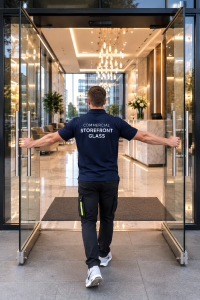 Utah Commercial Glass Repair
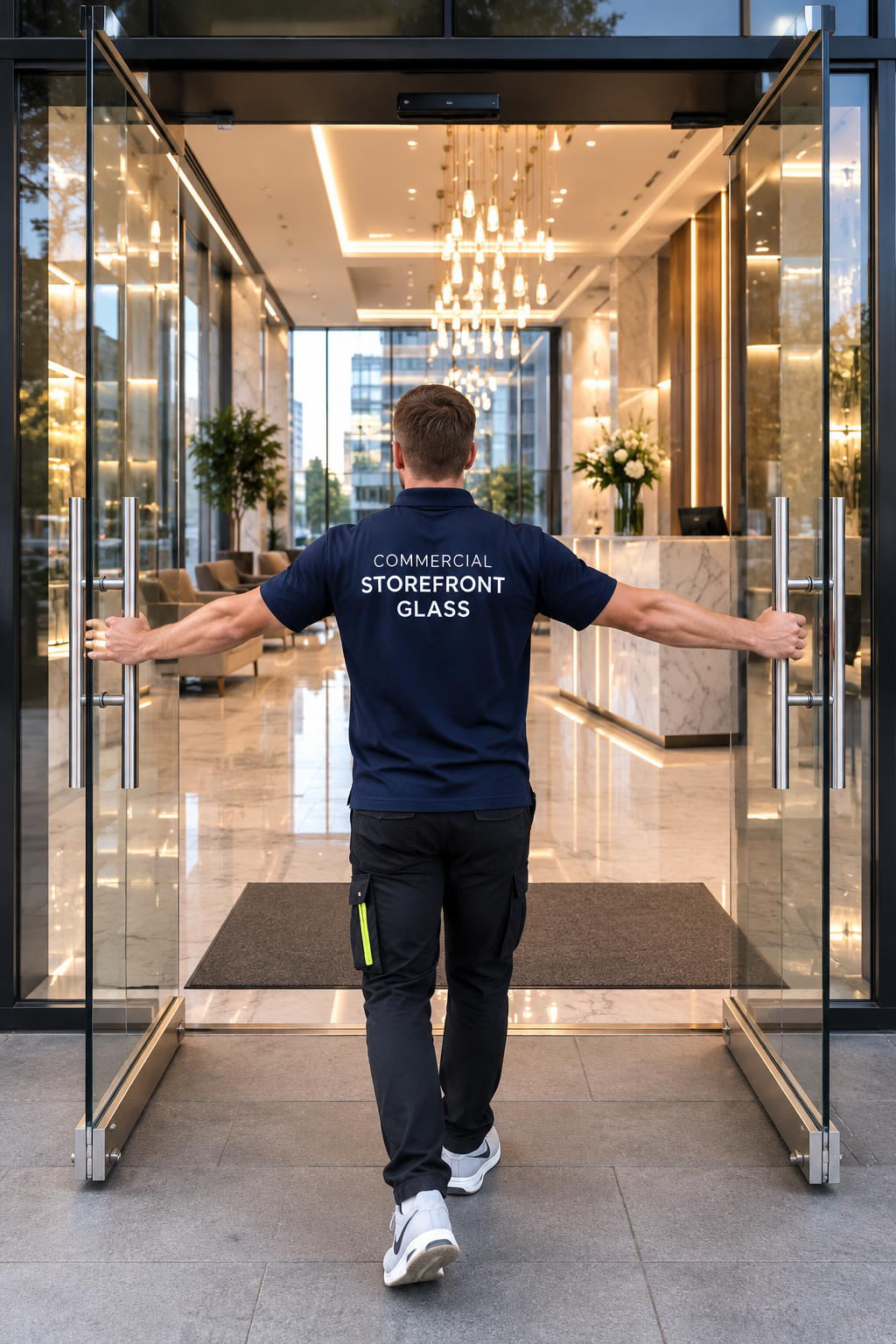
Commercial glass can fail because of impact, vandalism, accidental damage, failed insulated units, deteriorated seals, entrance problems, or normal aging.
Utah adds another variable: seasonal change.
A storefront may experience freezing winter conditions, snow accumulation, moisture, strong sunlight, and hot summer afternoons during the same year.
Those changing conditions affect more than the glass.
Aluminum framing, gaskets, perimeter sealants, doors, thresholds, exterior finishes, and adjacent building materials all have to function through the same environmental cycles.
A good repair starts by evaluating the opening rather than assuming the visible glass is the only problem.
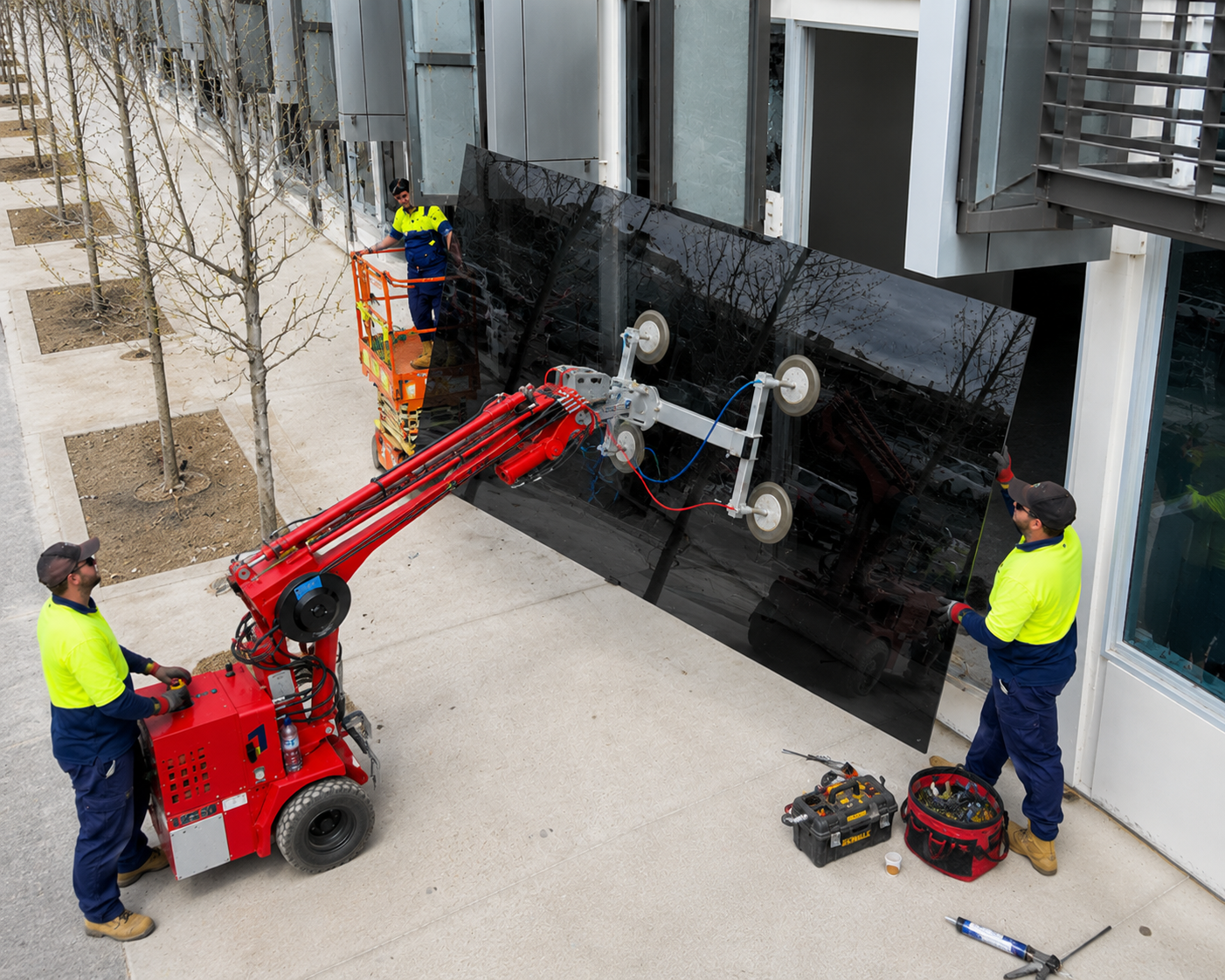
Cold Weather and Commercial Glass
Cold conditions make the exterior envelope particularly important.
Storefront glass separates heated interior space from winter conditions outside. Large glazed areas, entrance doors, framing, seals, and surrounding walls all influence the perimeter environment.
Failed insulated glass can become more noticeable during colder weather.
Air leakage around deteriorated doors or perimeter joints can also affect occupant comfort near the storefront.
When repairing an older system, contractors should consider the condition of the glazing and the components responsible for keeping the exterior opening properly sealed.
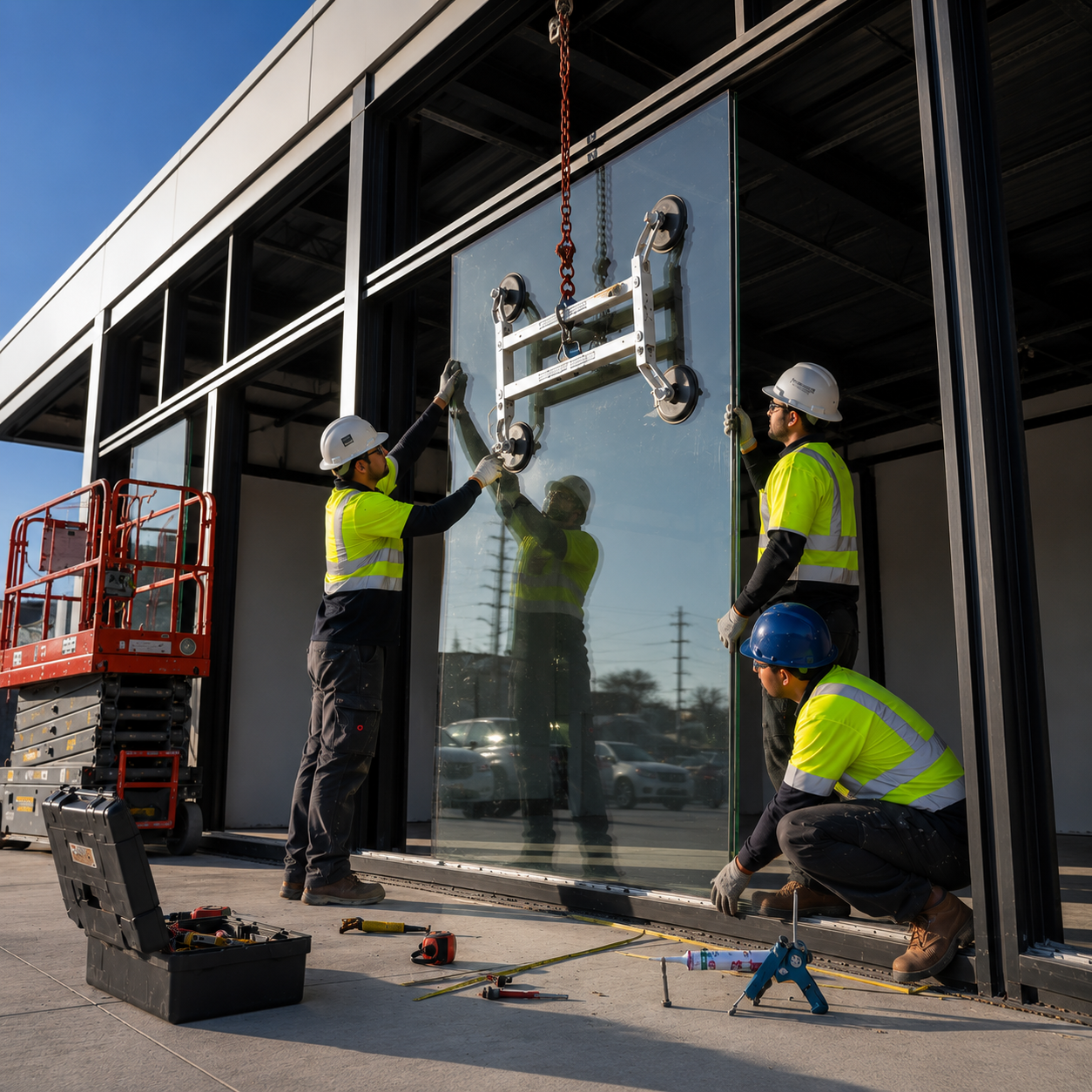
Freeze-Thaw Conditions Around Storefronts
Water and freezing temperatures can create problems around commercial openings.
Moisture can enter small cracks, joints, or deteriorated surrounding materials. When temperatures fall below freezing, that moisture can contribute to deterioration of adjacent construction over repeated cycles.
The glass itself may not be the original source.
Storefront perimeter joints, masonry, stucco, concrete, exterior finishes, flashing, and other transitions should be considered when damage develops around an opening.
Repairing the visible symptom without addressing the surrounding condition can allow the problem to continue.
Snow, Ice and Commercial Entrances
Utah storefront entrances have to remain functional during winter weather.
Snow, ice, moisture, deicing material, and debris can collect around thresholds and heavily traveled entrances.
Doors continue operating throughout those conditions.
Closers, pivots, hinges, thresholds, locks, panic hardware, and other components can all influence whether the entrance opens and closes correctly.
A storefront door that drags or fails to latch may need more than a simple adjustment.
Evaluating the complete entrance can identify whether the issue involves hardware, alignment, framing, thresholds, or another component.
Broken Storefront Glass
Broken commercial glass creates immediate concerns for safety, security, weather protection, and access.
Damage around a busy entrance can be particularly disruptive.
Permanent replacement starts with identifying the existing glazing and framing system.
Utah commercial properties can contain tempered glass, laminated glass, insulated glass, tinted glazing, oversized panels, and other architectural products.
The replacement should match the requirements of the opening rather than simply filling the dimensions left by the damaged glass.
Storefront Glass Repair or Replacement
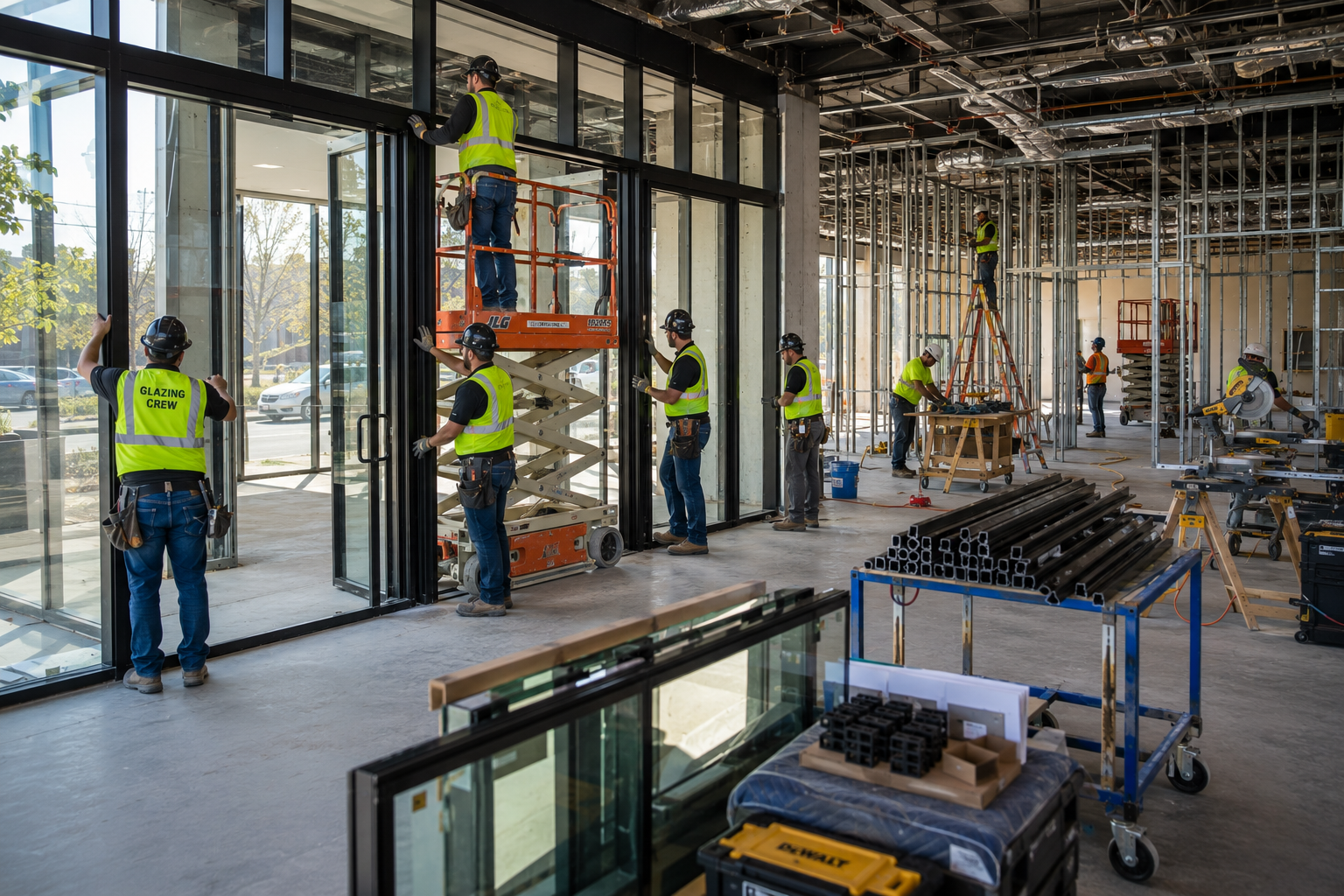
One damaged panel does not necessarily justify replacing the entire storefront.
When aluminum framing, doors, and surrounding construction remain serviceable, targeted glass replacement may be appropriate.
A different situation develops when problems are widespread.
Multiple failed insulated units, recurring door problems, deteriorated framing, failed perimeter seals, water intrusion, or an outdated storefront configuration can make broader replacement worth considering.
An upcoming tenant improvement can also change the decision.
If the façade is going to be redesigned for a new tenant, repairing an obsolete storefront immediately beforehand may provide limited long-term value.
Insulated Commercial Glass in Utah
Insulated glass is particularly relevant in a climate that experiences both winter cold and summer heat.
The sealed airspace between panes helps separate indoor and outdoor conditions.
When the seal fails, haze, condensation, or moisture may become visible between the panes.
Cleaning the exterior surfaces will not correct a failure inside the insulated unit.
Individual units can often be replaced while serviceable framing remains. When failures become widespread, the age of the storefront and future renovation plans can help determine whether a larger glazing project should be considered.
Salt Lake City Commercial Glass Repair
Salt Lake City combines an active commercial market with demanding seasonal conditions.
Retail properties, restaurants, offices, medical facilities, mixed-use developments, and other commercial buildings can require everything from individual glass replacement to complete tenant improvements.
Winter conditions are a legitimate building-design consideration. Salt Lake City’s published criteria identify a 5B climate zone, severe weathering, an 8-degree winter design temperature, ice-barrier requirements, and minimum snow-load considerations.
That environment makes the relationship between glazing, roofing, HVAC, entrances, and the larger building envelope particularly important.
Salt Lake City Storefront Renovations
Existing Salt Lake City buildings can also contain storefronts that have been modified repeatedly.
A previous tenant may have relocated a door. Another may have added signs or security equipment. Interior walls, ceilings, lighting, HVAC, and electrical infrastructure may have changed several times.
Demolition can expose those previous modifications.
Old fasteners, deteriorated sealants, abandoned wiring, damaged substrates, or previous water intrusion may appear once the existing storefront is opened.
Field conditions should guide the repair rather than assuming the original construction remains intact.
Provo and Orem Commercial Glass
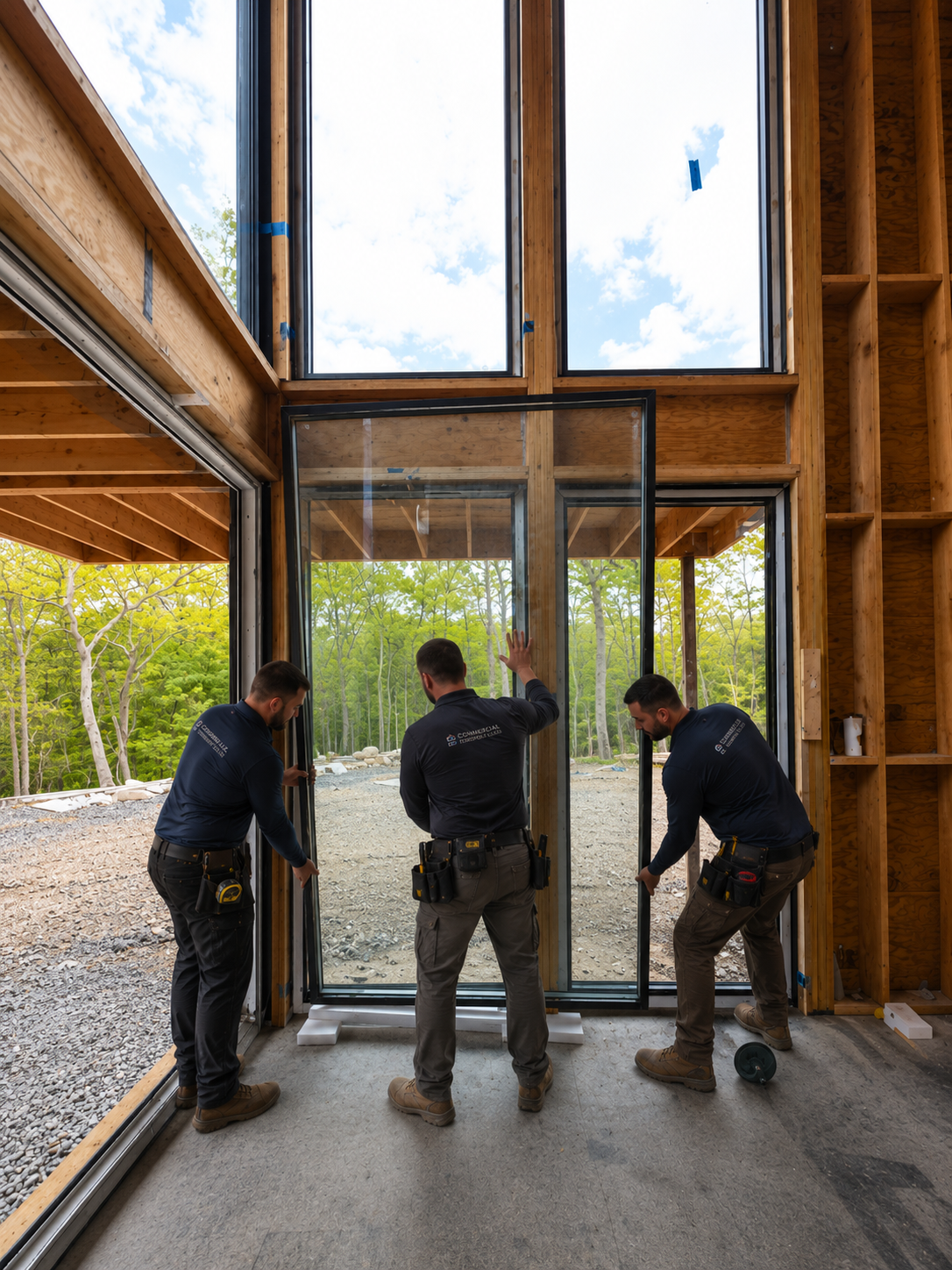
Provo and Orem commercial properties include retail centers, offices, restaurants, medical spaces, mixed-use developments, and other tenant environments.
Storefront requirements can change significantly when businesses move in and out.
A new tenant may need a different entrance, larger glass openings, updated doors, new signs, or a completely different interior layout.
That makes storefront glass a natural part of the tenant improvement.
Glazing can be coordinated with flooring, drywall, painting, electrical work, HVAC modifications, signs, access controls, and other construction instead of being treated as a separate project.
Lehi Commercial Glass and Tenant Improvements
Lehi’s commercial environment creates another type of glazing opportunity.
Modern office, technology, retail, restaurant, and mixed-use properties can incorporate substantial exterior and interior glass.
Tenant improvements may combine storefront entrances with interior glass conference rooms, sidelites, partitions, and architectural glazing.
Mechanical and electrical systems can also change as the tenant layout changes.
Coordinating the glazing with the finished architectural plan helps the storefront and interior work as one commercial environment.
Ogden Commercial Glass Repair
Ogden includes commercial properties from different construction periods, making existing conditions especially important.
Older storefront systems may have undergone several generations of repairs and modifications.
Removing glass or framing can expose deteriorated materials that were previously concealed.
The opening may require restoration before new glazing is installed.
Evaluating framing, substrates, sealants, adjacent finishes, and previous modifications can help distinguish a straightforward glass replacement from a larger storefront renovation.
Park City and Higher-Elevation Conditions
Higher-elevation Utah commercial properties introduce additional environmental considerations.
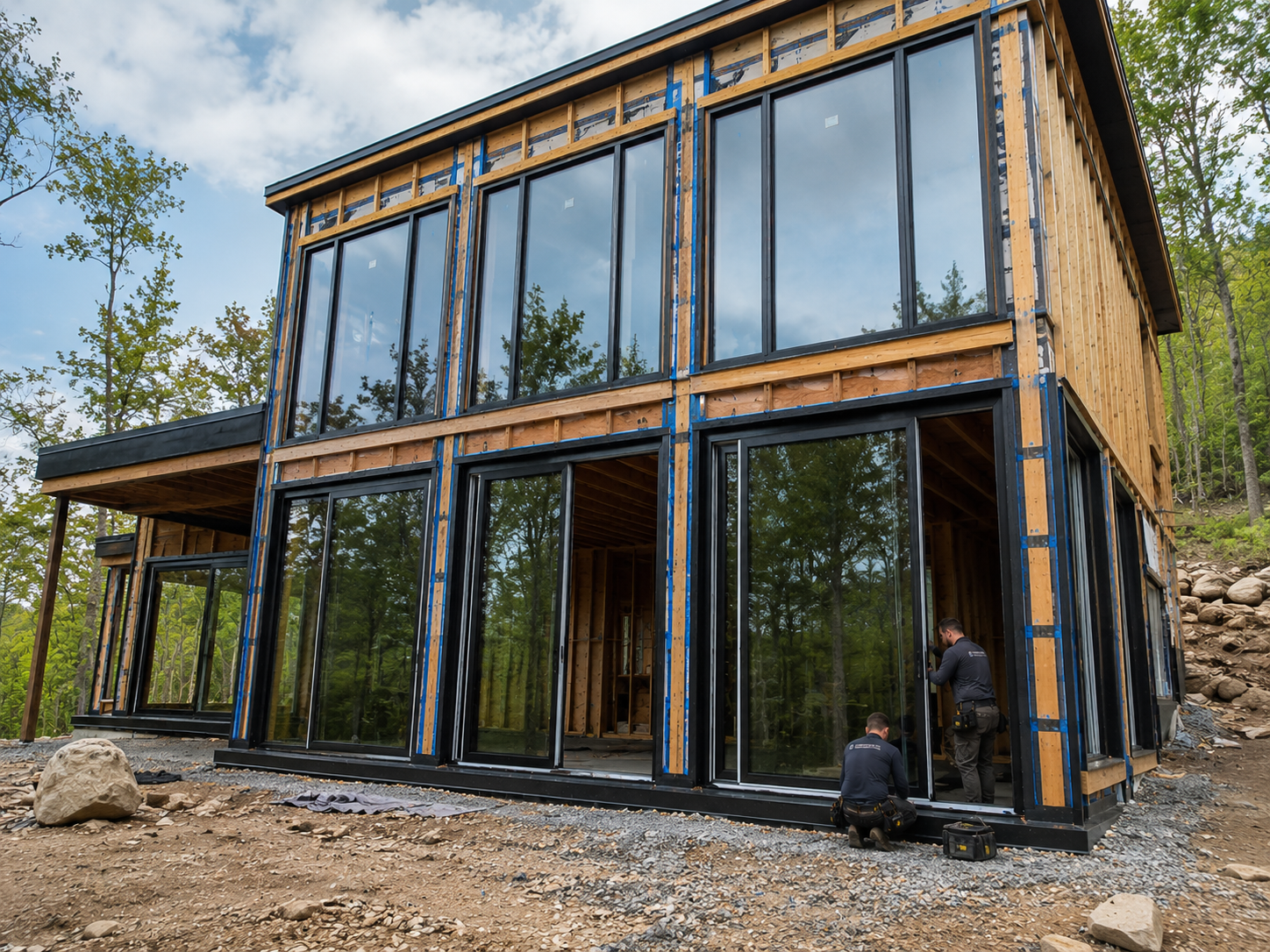
Snow accumulation, colder temperatures, wind, ice, and seasonal moisture can place different demands on exterior building systems than properties at lower elevations.
Roof conditions become especially important.
Snow and water moving from roofs, canopies, and exterior surfaces must be managed so moisture does not create recurring problems around storefront openings.
Commercial glazing in these environments should be considered as part of the complete weather-protection strategy of the building.
Commercial Glass and Roofing
Roofing and storefront glass may be separated physically, but they protect the same commercial interior.
Water appearing around storefront framing does not automatically mean the glass is leaking.
Moisture can originate at roof edges, parapets, flashing, wall penetrations, canopies, drainage conditions, or exterior joints.
Water may then travel through the construction before becoming visible near a window or entrance.
This becomes especially important when snow and ice are involved.
Finding the actual source should come before repeatedly applying sealant around the visible symptom.
Snowmelt and Water Intrusion
Snow can remain on roofs and exterior surfaces before melting.
That creates different moisture conditions from a short rainstorm.
Water may move through roof transitions, drainage systems, wall assemblies, flashing, or exterior joints before reaching the interior.
Repeated freezing and thawing can further complicate existing defects.
When moisture appears near storefront glass, the investigation may need to extend upward and outward from the opening.
Roofing, waterproofing, exterior finishes, drainage, and glazing can all be part of the same diagnosis.
Restoration After Water Damage
Water intrusion can damage much more than glass.
Drywall, insulation, ceilings, flooring, paint, framing, and other interior materials may be affected.
A storefront repair can therefore become part of a restoration project.
The moisture source should be corrected before damaged finishes are rebuilt.
Glazing repairs can then be coordinated with drying, roofing, waterproofing, drywall replacement, painting, flooring, and other restoration work.
The goal is to solve the building problem rather than simply conceal its interior evidence.
Commercial Glass and HVAC
Utah commercial HVAC systems have to respond to very different seasonal conditions.
During winter, the storefront separates heated interior space from cold outdoor temperatures. During summer, solar exposure through large glass areas can contribute to perimeter cooling demands.
The same glazing therefore participates in the building’s performance throughout the year.
A tenant improvement can change those conditions further.
Walls move, occupancy changes, and storefront openings may become larger or smaller.
Supply registers, returns, thermostats, zoning, controls, and equipment should support the completed space rather than the previous tenant’s layout.
Energy Performance and Storefront Glass
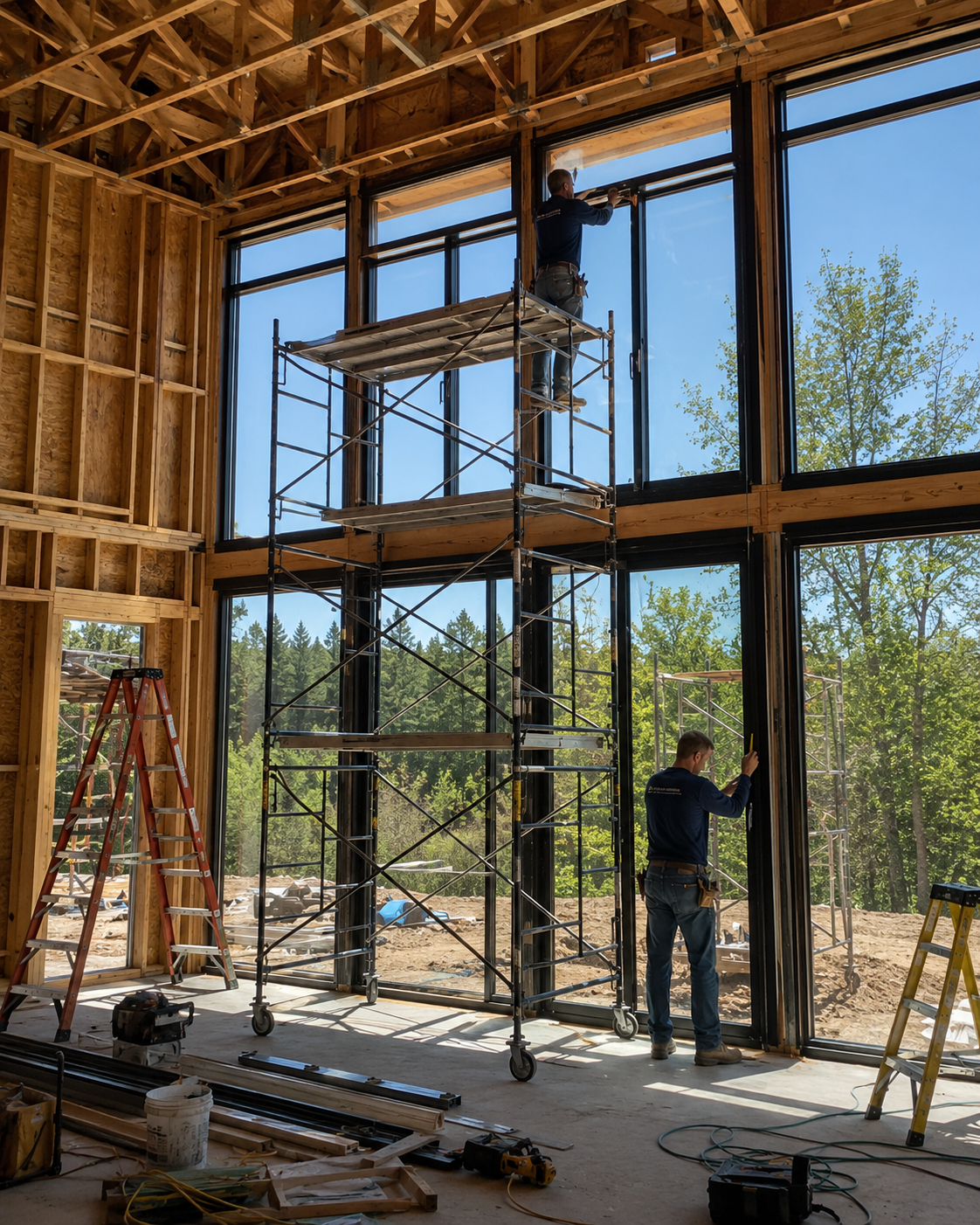
Storefront renovation can create an opportunity to consider energy performance along with appearance.
Utah’s energy code applies efficiency requirements to new and renovated buildings, and commercial energy provisions address the building envelope alongside other systems.
That makes glazing part of a larger energy conversation.
Insulated glass, perimeter sealing, doors, framing, HVAC, lighting, and insulation all influence how a commercial space separates indoor conditions from the environment outside.
When a storefront is being substantially renovated, these relationships deserve consideration before selecting the final system.
Rooftop HVAC and Roofing
Commercial tenant improvements frequently extend from the storefront all the way to the roof.
A new tenant may require different HVAC equipment, ventilation, exhaust, or duct distribution.
Rooftop equipment can involve curbs, penetrations, flashing, electrical feeds, and roofing work.
Those changes need to protect the roof assembly.
The interior below may simultaneously be receiving new glass, ceilings, flooring, walls, lighting, and finishes.
Coordinating the mechanical and roofing scopes helps protect the investment being made throughout the tenant space.
Electrical Systems Around Utah Storefronts
Commercial storefronts increasingly incorporate electrical and low-voltage infrastructure.
Illuminated signs, exterior lighting, automatic doors, access controls, cameras, card readers, sensors, and digital displays can all interact with the glazing system.
A tenant improvement can add further electrical work behind the storefront.
New panels, receptacles, lighting, equipment circuits, data systems, and emergency systems may be required depending on the business.
Finalizing the storefront configuration early gives electrical contractors accurate locations for entrances, signs, displays, and other components.
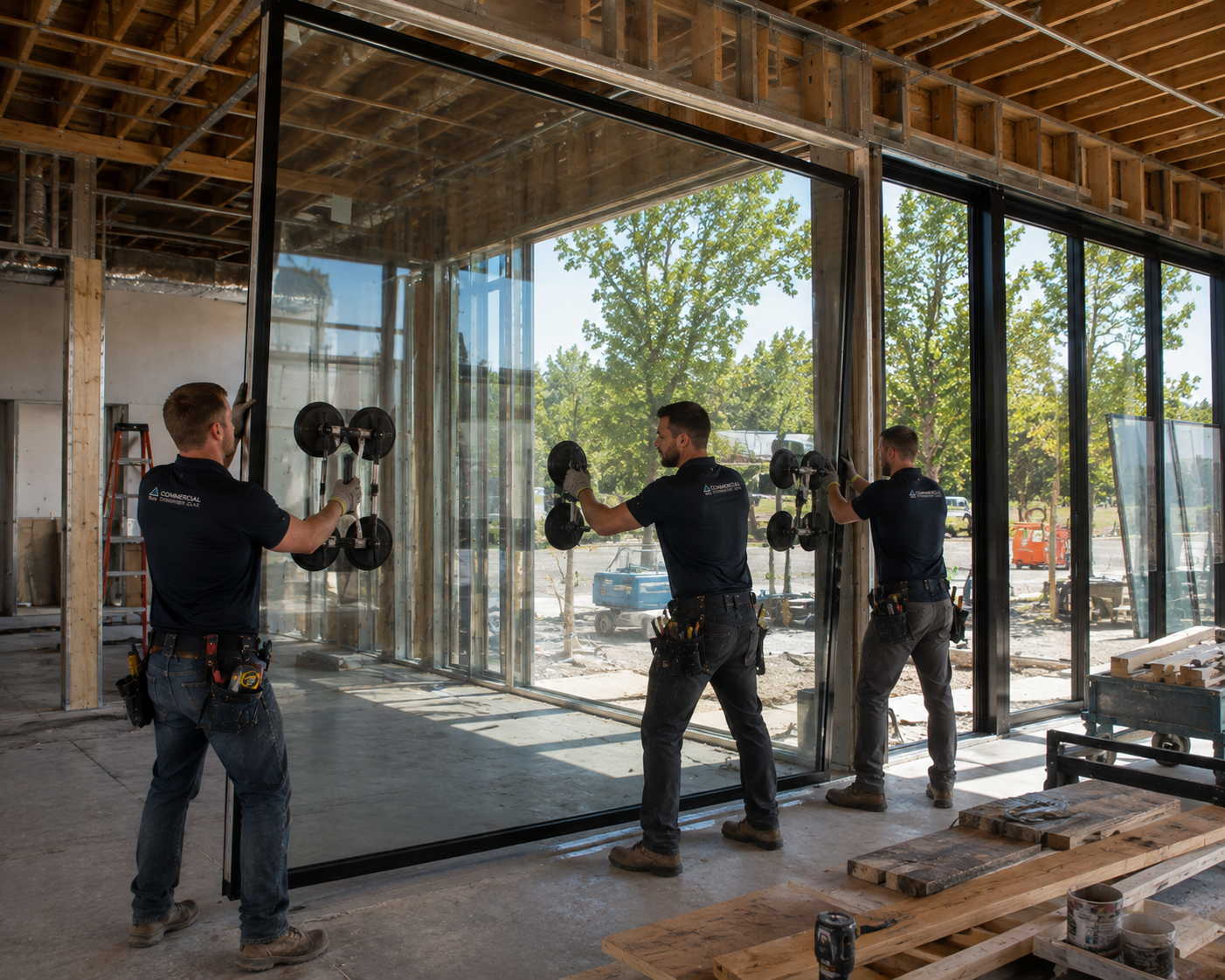
Commercial Storefront Doors
Doors experience conditions that fixed glass does not.
They open into cold winter air, operate during snow and wet weather, and may cycle hundreds of times during a busy commercial day.
Entrance performance depends on more than the glass in the door.
Closers, pivots, hinges, thresholds, locks, panic hardware, weather seals, framing, and access controls all contribute to operation.
When an entrance repeatedly needs adjustment, identifying the underlying cause can provide a better solution than continuing to treat individual symptoms.
Aluminum Storefront Framing
Aluminum framing establishes the structure of most conventional commercial storefront systems.
The framing holds the glass, supports entrance components, and connects the storefront to the surrounding construction.
Damage can make a glass replacement more complicated.
Bent members, damaged stops, failed gaskets, deteriorated perimeter sealants, loose connections, or previous modifications may affect whether existing framing should remain.
Seasonal temperature changes also make proper perimeter conditions important.
The complete assembly needs enough integrity to support the replacement glazing throughout Utah’s changing weather.
Tenant Improvement Storefront Glass
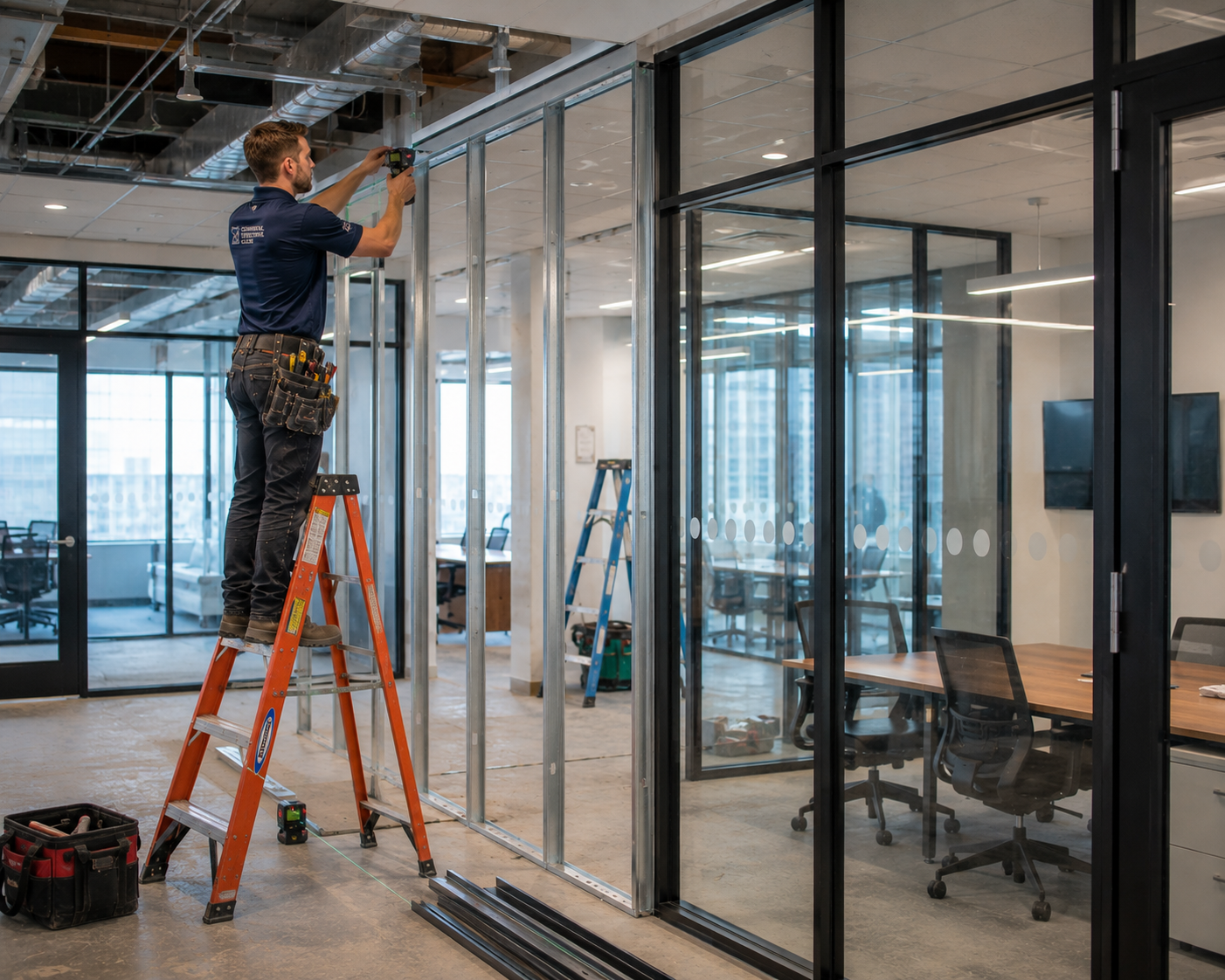
Tenant improvements are often the right time to reconsider an existing storefront.
A new tenant may need greater visibility, different entrance locations, upgraded doors, new signs, interior glass, or a completely modernized façade.
Those decisions affect the construction behind the glass.
Interior walls meet storefront framing. Flooring terminates at thresholds. Ceilings and soffits connect to exterior openings. Electrical systems support signs and entrances. HVAC responds to the finished envelope.
Coordinating these scopes early helps prevent completed work from being removed and rebuilt.
Plumbing and Changing Tenant Uses
Plumbing can influence storefront planning even when the piping never approaches the façade.
A retail suite converted into a restaurant may require new kitchen plumbing, drains, restrooms, and water service.
Medical, salon, fitness, and other specialized tenants can introduce their own plumbing requirements.
These systems influence the interior floor plan.
The floor plan determines reception areas, customer circulation, service counters, seating, and accessible routes beginning at the storefront entrance.
That is why commercial glazing should ultimately support the complete tenant operation.
Painting and Exterior Finishes
New glass can make surrounding finishes look considerably older.
Faded paint, weathered stucco, patched masonry, previous sign locations, and mismatched coatings may become more obvious after a storefront is replaced.
Painting and restoration help connect the new glazing with the existing façade.
Interior surfaces can require similar attention.
Drywall, ceilings, columns, soffits, trim, and walls around the storefront may be disturbed during construction.
Completing these transitions properly makes the new storefront appear integrated rather than inserted into an older building.
Retail Storefront Glass Repair
Retail storefronts depend on visibility and reliable customer access.
Broken glass, failed insulated units, damaged doors, deteriorated framing, or temporary repairs can affect both appearance and daily operation.
Shopping-center tenant improvements may provide an opportunity to address several issues at once.
Glass, signs, lighting, electrical work, flooring, displays, painting, and entrance hardware can be coordinated around the new tenant.
That can produce a more complete result than repairing each element independently.

Restaurant Storefront Glass
Restaurant tenant improvements connect storefront glass with nearly every major commercial trade.
The glass establishes visibility and the entrance.
Inside, plumbing supports kitchens, bars, and restrooms. Electrical systems power equipment, signs, and lighting. HVAC manages heating, cooling, occupancy, and kitchen-related loads.
Ventilation can extend the project to rooftop equipment and roofing.
Flooring, painting, fire protection, doors, and architectural finishes add further layers.
The storefront should be planned around that complete commercial environment.
Office and Medical Glass
Office and medical properties can combine exterior storefront repair with interior architectural glazing.
Glass conference rooms, partitions, sidelites, reception areas, and interior doors can become part of a larger renovation.
Medical tenant improvements may also involve significant HVAC, plumbing, electrical, and accessibility work.
The exterior entrance should support the completed interior circulation.
Coordinating exterior and interior glass can create a more consistent architectural result while simplifying construction sequencing.
Emergency Commercial Glass Replacement
Vehicle impact, vandalism, severe breakage, and entrance damage can create an immediate need to secure a commercial property.
Safety comes first.
Permanent replacement can then account for the existing glass type, framing, entrance system, and surrounding conditions.
A significant impact may damage more than the visible pane.
Aluminum framing, door hardware, adjacent finishes, electrical devices, and interior materials can also be affected.
The permanent repair should address the complete damaged area.
Repair or Replace the Storefront?
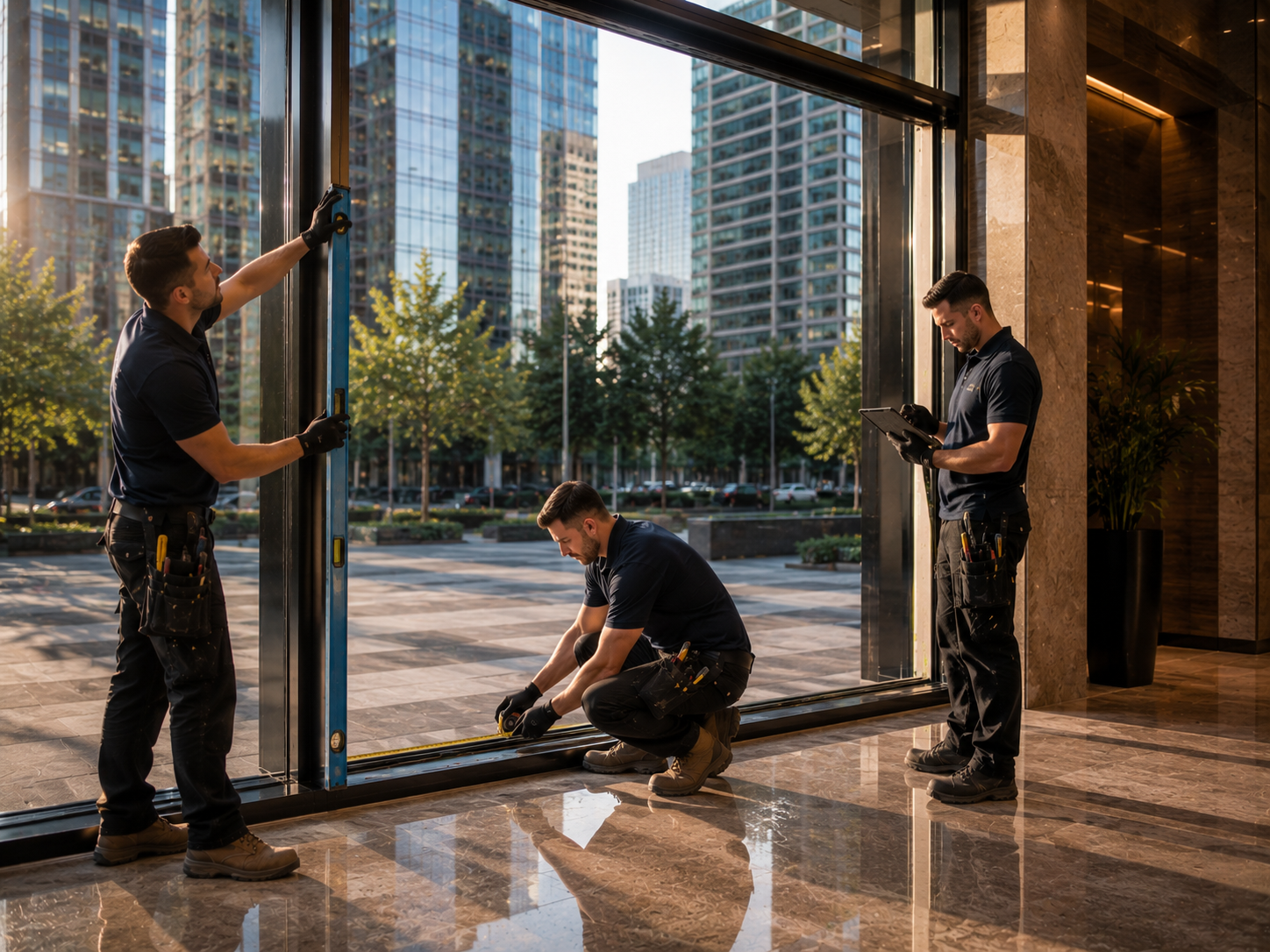
The best approach depends on both current conditions and future plans.
A single broken panel within a functional storefront can favor repair.
Multiple failed insulated units, recurring entrance problems, damaged framing, persistent leaks, deteriorated seals, or an outdated configuration can make replacement more attractive.
An upcoming tenant improvement changes the calculation further.
Instead of preserving an entrance or façade designed for the previous occupant, the storefront can be rebuilt around the operational and architectural needs of the new business.
Commercial Glass Repair Across Utah
BHG Storefront supports commercial glass and storefront projects throughout Utah, including Salt Lake City, West Valley City, Sandy, Draper, Lehi, Provo, Orem, Ogden, Layton, Park City, St. George, and surrounding commercial markets.
Conditions can vary considerably across those locations.
Salt Lake City properties contend with strong seasonal changes. Higher-elevation areas add greater snow and cold exposure. Growing Wasatch Front markets can involve newer retail, office, medical, and mixed-use tenant improvements. Southern Utah introduces hotter and drier conditions.
Commercial glazing should reflect the actual building, environment, and intended use rather than relying on a one-size-fits-all approach.
A Complete Utah Commercial Glass Strategy
Commercial glass repair in Utah sits at the intersection of glazing, weather, and the larger building.
Glass and aluminum face winter cold and summer sun. Snow and ice interact with entrances, roofs, and drainage. HVAC systems respond to major seasonal changes. Roofing and waterproofing protect the tenant improvements below.
Electrical systems support signs, lighting, security, and entrances. Plumbing helps determine how new tenants use existing spaces. Restoration corrects water damage and hidden deterioration. Painting and architectural finishes bring old and new construction together.
Whether a Utah commercial property needs one damaged glass panel replaced, an entrance repaired, failed insulated units addressed, a storefront modernized, or a complete tenant improvement, the strongest approach looks beyond the glass.
It considers how the storefront works with the entire commercial building.