
Texas Commercial Glass Contractor
Commercial glass repair in Texas covers an unusually wide range of building conditions. A storefront in Dallas faces different environmental demands from commercial glazing in Houston, Austin, San Antonio, or along the Gulf Coast.
Extreme summer heat, intense sunlight, hail, severe thunderstorms, high winds, hurricanes, humidity, and rapidly expanding commercial markets can all influence storefront glass and aluminum systems.
BHG Storefront supports commercial properties with glass repair, storefront replacement, glazing, entrance systems, and related tenant improvement work throughout Texas.
Projects can range from one broken storefront panel or damaged entrance to failed insulated glass, aluminum framing repairs, storm damage, water intrusion, and complete commercial storefront modernization.
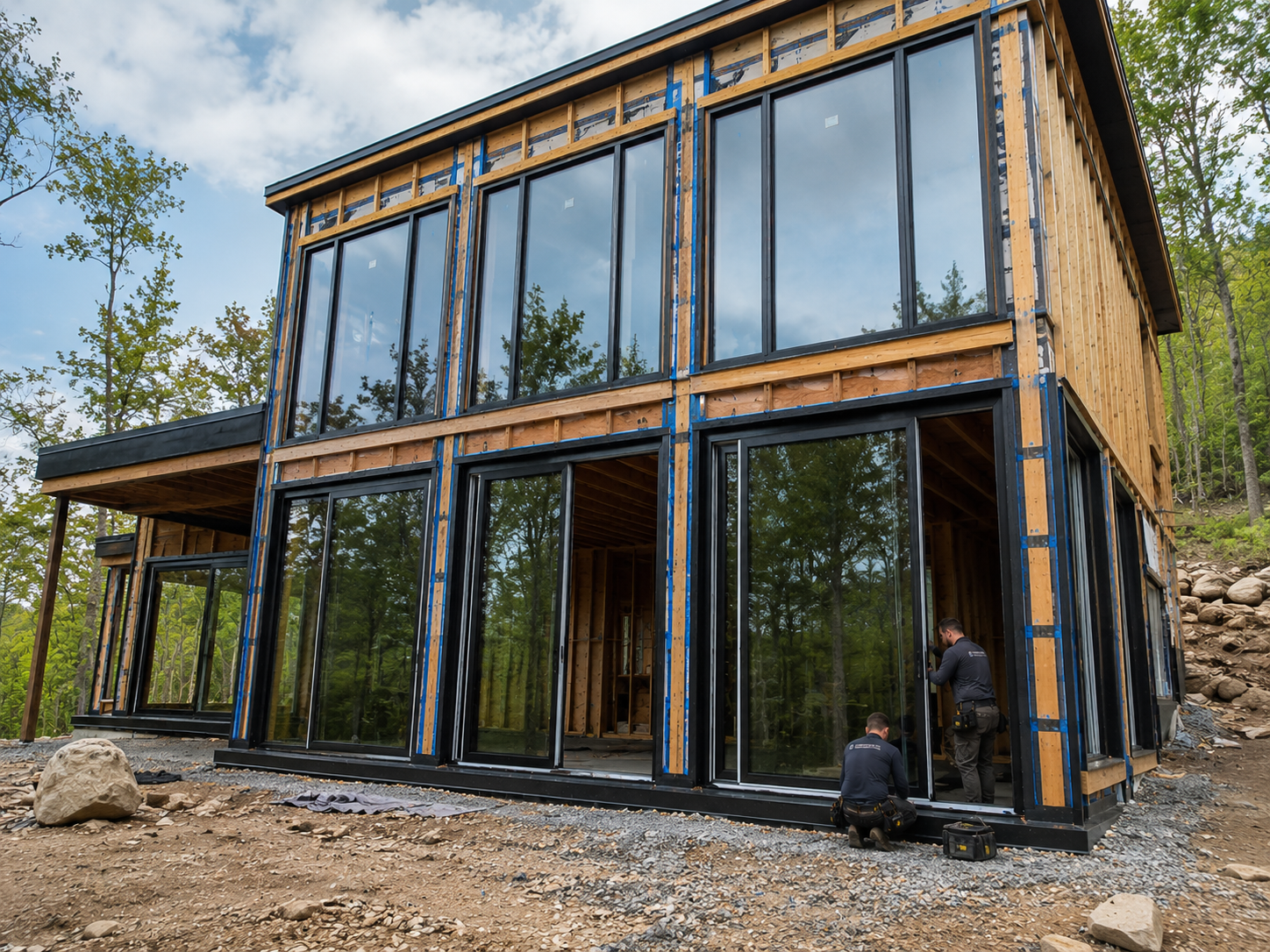
Texas Commercial Glass Repair
Commercial glass can fail suddenly through impact or storm damage, but many storefront problems develop gradually.
Insulated glass seals can fail. Door hardware wears out. Aluminum framing can become damaged. Perimeter sealants deteriorate. Water can find its way through weaknesses around the building envelope.
Texas weather adds another layer.
A commercial storefront can spend months exposed to intense sunlight and high temperatures before experiencing a severe thunderstorm, hail event, or dramatic temperature change.
Repair should therefore consider the glass, framing, entrance, seals, and surrounding building conditions together.
Heat and Texas Storefront Glass
Summer heat is one of the most important conditions affecting commercial properties throughout Texas.
Large glass areas create visibility and daylight, but they also separate heavily conditioned interiors from extreme exterior temperatures.
Orientation matters.
A west-facing storefront receiving intense afternoon sunlight experiences different conditions from glazing protected by an overhang or facing north.
Glass type, framing, shading, doors, and surrounding construction all contribute to the performance of the exterior opening.
During a substantial storefront renovation, these conditions should be considered alongside HVAC and energy performance.
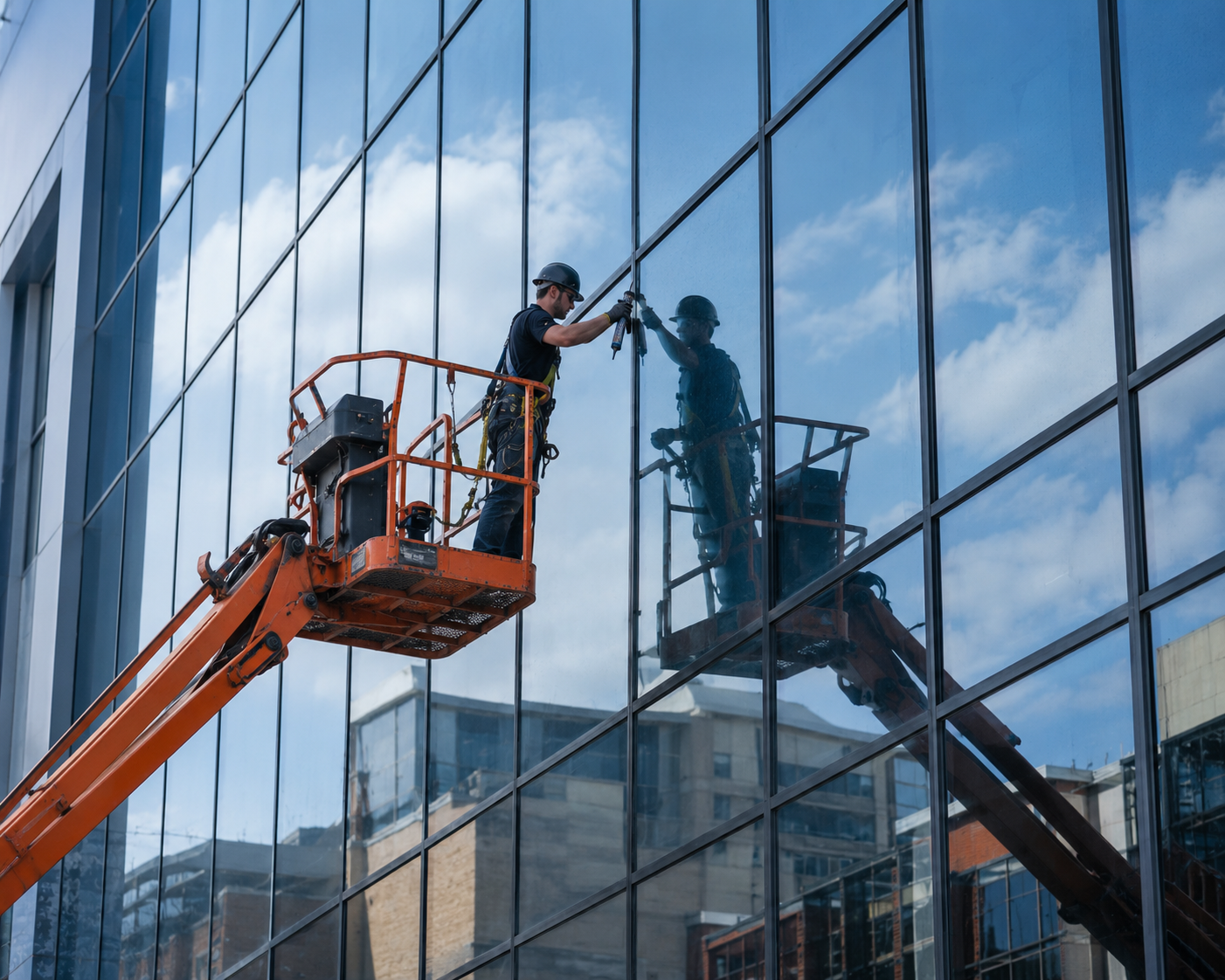
Solar Exposure and Commercial Glazing
Texas storefronts can receive substantial direct sunlight throughout the year.
That exposure affects more than interior comfort.
Glass, aluminum framing, gaskets, perimeter sealants, paint, and surrounding exterior materials are all exposed to changing temperatures and UV radiation.
Some elevations experience considerably more exposure than others.
When repeated sealant problems, failed insulated units, or unexplained glass conditions develop, evaluating the orientation and surrounding assembly can provide useful information about why one portion of a storefront is aging differently from another.
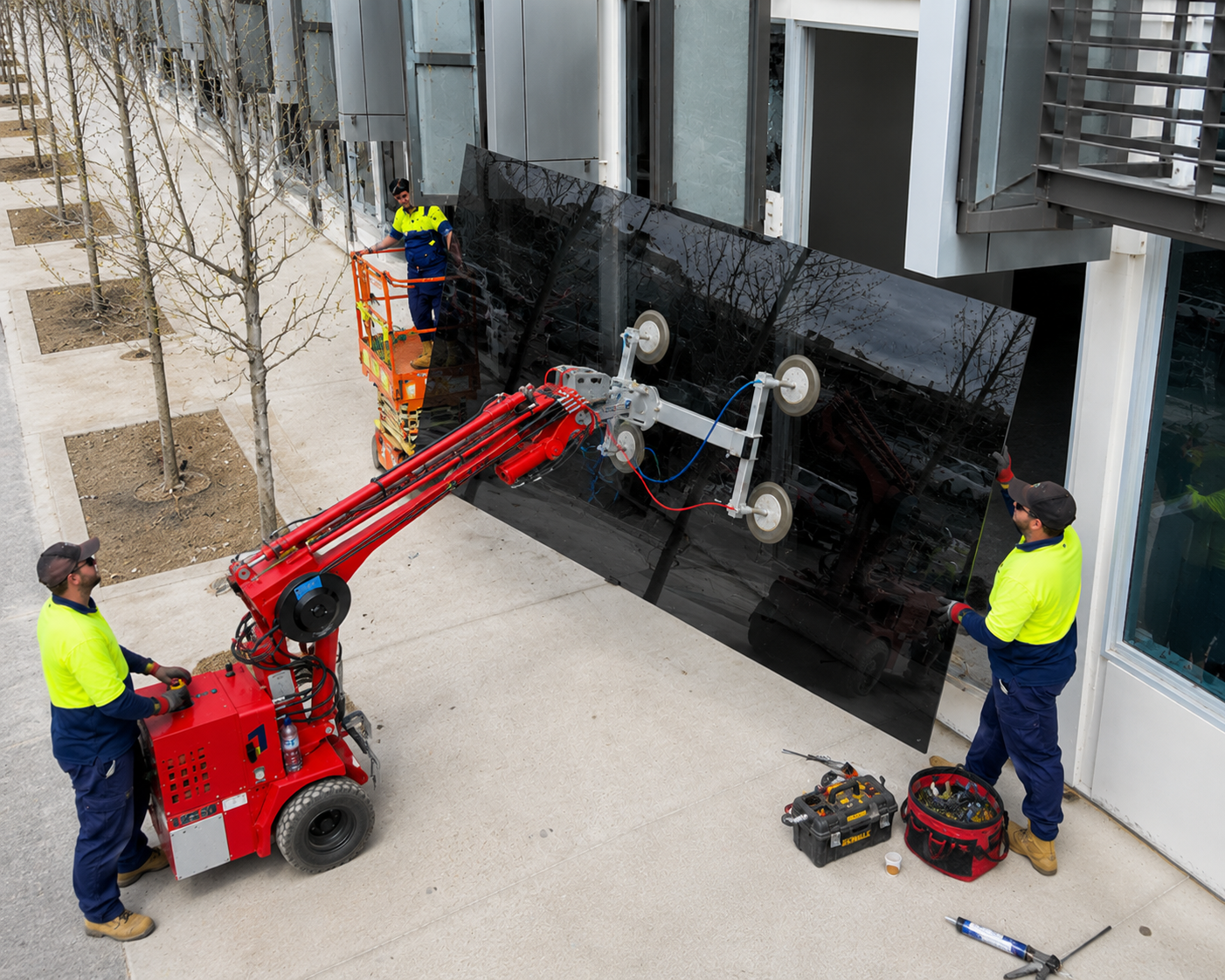
Broken Storefront Glass
Broken commercial glass creates immediate concerns for security, safety, weather protection, and business operations.
Damage near an entrance can also interfere with normal customer traffic.
Permanent replacement begins by identifying the existing glazing system.
Texas commercial properties can contain tempered glass, laminated glass, insulated units, tinted glazing, oversized panels, and other architectural glass products.
The correct replacement depends on the opening, framing, location, and applicable requirements rather than simply the dimensions of the broken panel.
Storefront Glass Repair or Replacement
Not every damaged storefront needs complete replacement.
A single broken lite within functional framing may favor targeted glass replacement.
The situation changes when failures become widespread.
Damaged aluminum, recurring entrance problems, multiple failed glass units, deteriorated perimeter seals, persistent water intrusion, or an outdated storefront design can justify evaluating a larger replacement.
Future construction matters as well.
If a commercial tenant improvement is approaching, redesigning the storefront around the new tenant may provide more value than extensively repairing a façade that will soon change.

Dallas Commercial Glass Repair
Dallas commercial glass operates in an environment defined by heat, strong sunlight, severe thunderstorms, hail, high winds, and rapidly changing commercial properties.
Retail centers, restaurants, offices, medical facilities, industrial buildings, and mixed-use developments create very different glazing requirements.
Many projects also involve tenant turnover.
An existing storefront designed for one business may not work for the next.
Entrances, signs, displays, electrical infrastructure, interior walls, and HVAC distribution can all change during a Dallas tenant improvement.
Coordinating the storefront with those changes can turn a repair into a more complete commercial renovation.
Fort Worth Storefront Glass
Fort Worth presents many of the same environmental conditions as Dallas while containing its own mixture of newer development and existing commercial buildings.
Older storefronts may have been modified several times.
Previous tenants can leave behind old signs, abandoned wiring, patched framing, modified entrances, and inconsistent exterior finishes.
Demolition sometimes reveals conditions that were invisible before construction started.
Field evaluation becomes especially important when existing framing will remain.
A replacement glass panel can only perform as intended when the opening receiving it is in suitable condition.
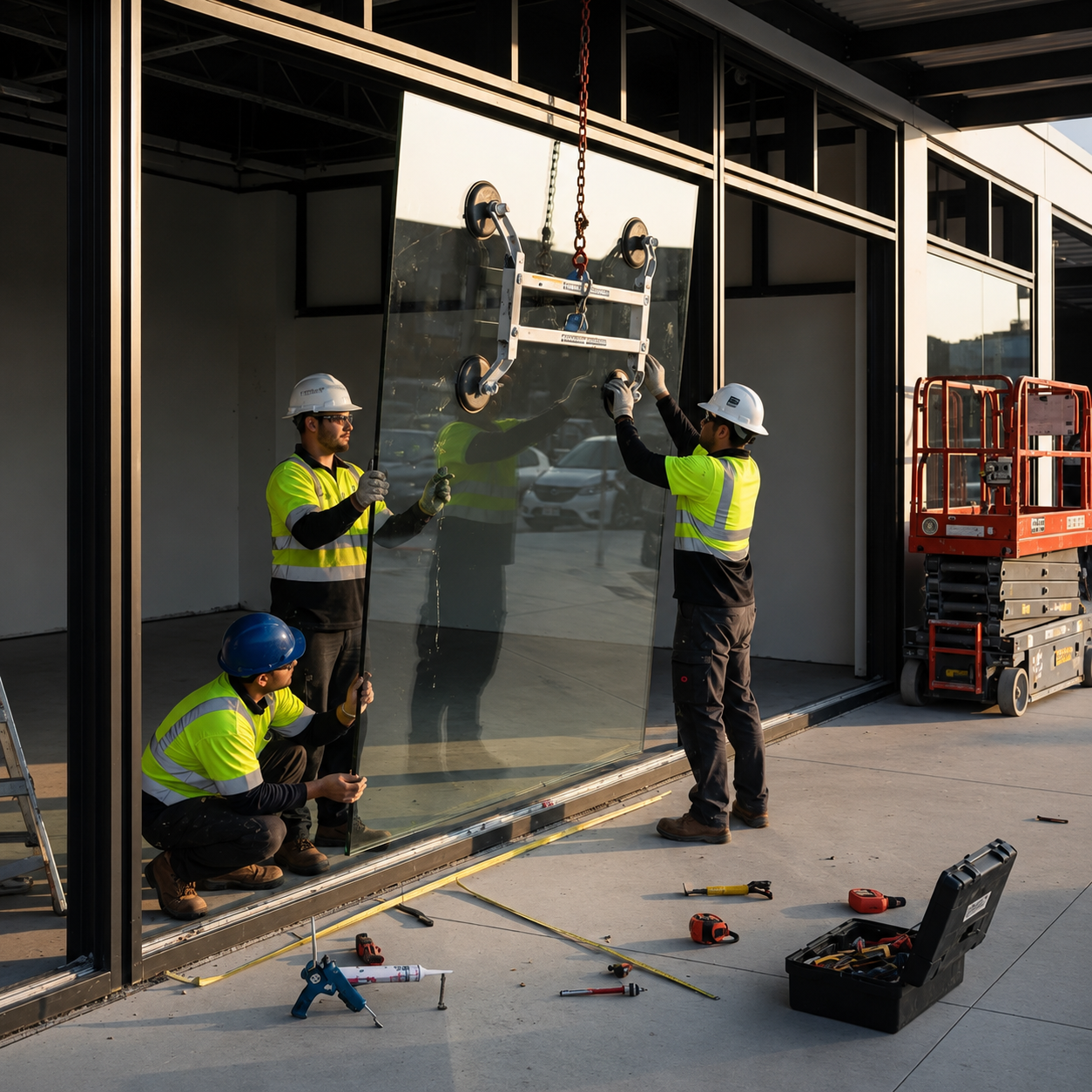
Houston Commercial Glass Repair
Houston requires a different commercial-glass strategy.
Heat remains important, but humidity, heavy rain, tropical weather, and Gulf Coast storm exposure introduce additional building-envelope concerns.
Water management deserves particular attention.
Moisture appearing around storefront glass may originate at the glazing, but it can also travel from roof edges, wall joints, flashing, canopies, penetrations, or other parts of the exterior envelope.
Repeatedly resealing the visible area will not correct a problem originating somewhere else.
Houston storefront repair should therefore distinguish between glass failure and a larger water-intrusion problem.
Gulf Coast Wind and Commercial Glazing
Coastal Texas adds one of the state’s most distinctive glazing considerations: severe wind.
Commercial exterior openings in designated catastrophe areas can be subject to specific windstorm requirements.
Depending on location and project conditions, glazing, frames, attachment methods, doors, and opening protection may need to address wind pressure and windborne debris requirements.
The storefront needs to be considered as an assembly.
Glass alone does not determine how an exterior opening performs. Framing, attachment, hardware, installation method, and surrounding construction are also part of the system.
For coastal projects, local requirements should be established before replacement materials are selected.
Windborne Debris and Storefront Openings
Storm debris changes the way exterior glass must be considered in certain coastal environments.
During major wind events, objects can strike glazing with substantial force.
That means the appropriate solution may involve more than simply selecting thicker glass.
The complete tested or approved opening can include glass, framing, attachment, hardware, and installation details.
Commercial property owners planning coastal storefront replacement should determine the requirements applicable to the building and location before fabrication.
This is especially important when storm damage triggers a larger reconstruction project.
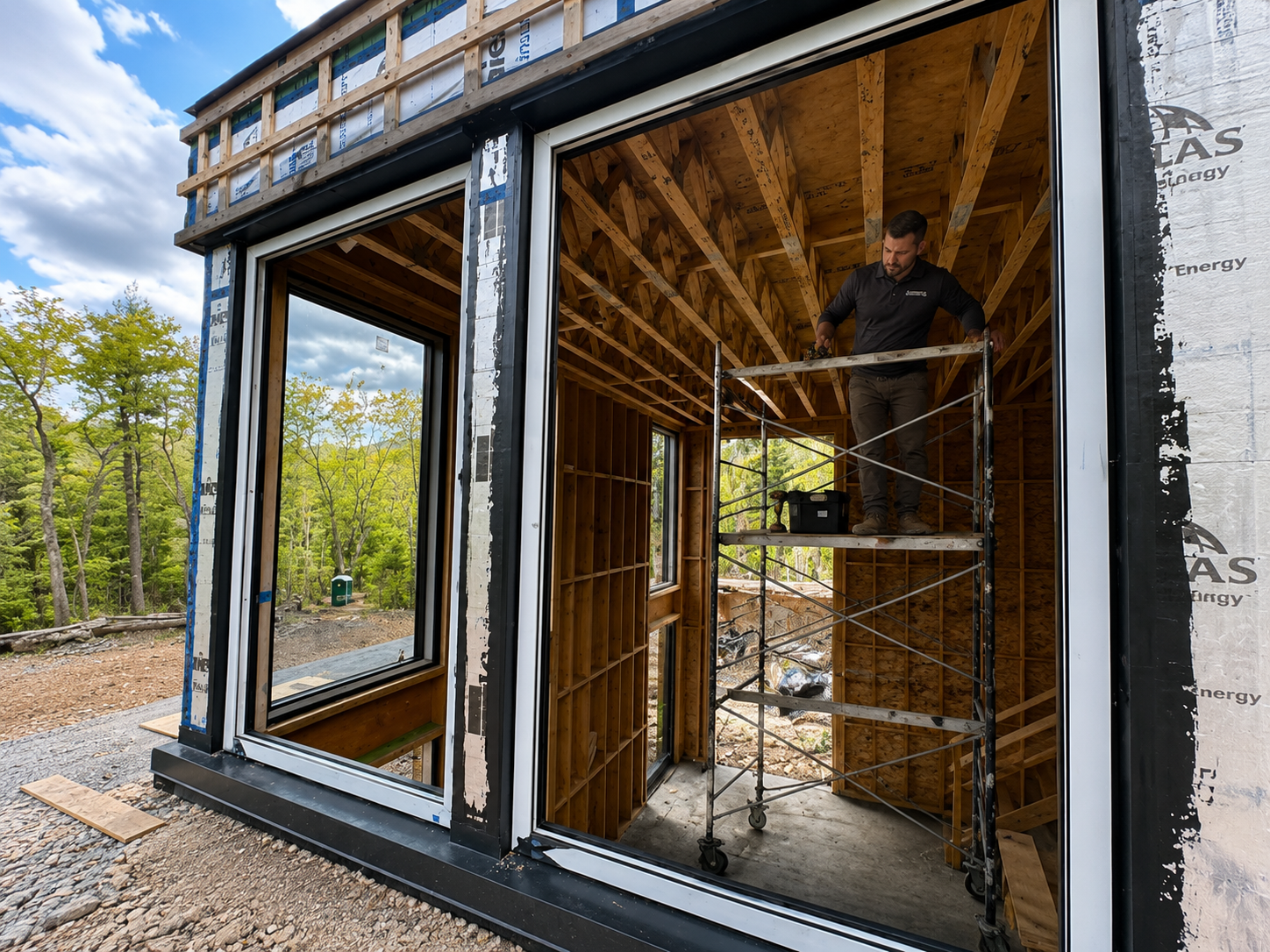
Hail and Severe Texas Storms
Hurricanes receive significant attention, but severe thunderstorms affect a much larger portion of Texas.
High winds, hail, wind-driven rain, and flying debris can damage commercial properties far from the coast.
Storefront glass may be broken directly.
Signs, roofing materials, exterior finishes, or nearby objects can also become part of the damage.
After a major storm, the most visible broken glass may not represent the entire repair scope.
Doors, framing, roofing, electrical signs, exterior finishes, and interior materials should also be evaluated when the event affected multiple parts of the property.
Commercial Glass and Water Intrusion
Water near a storefront requires diagnosis.
The point where moisture becomes visible may not be where it entered the building.
Water can move through wall assemblies, along framing, behind finishes, and around structural components.
A roof or parapet problem can eventually appear near storefront glass.
A failed exterior joint can produce a similar result.
Repair should begin by understanding the path of the water rather than automatically applying additional sealant to the most obvious location.
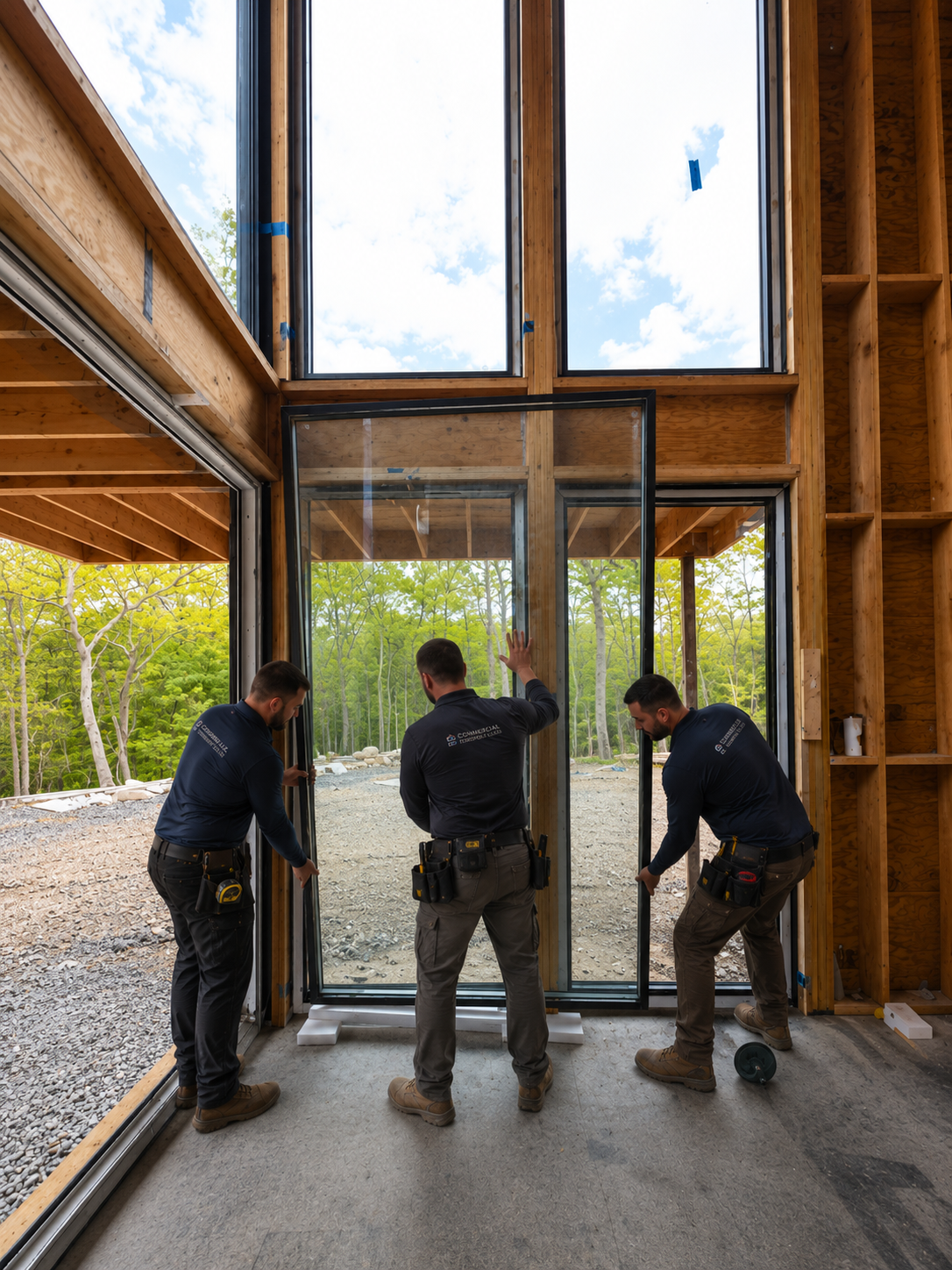
Commercial Glass and Roofing
Roofing and storefront glazing are different trades, but they are parts of the same exterior building envelope.
Roof leaks can damage ceilings, walls, insulation, flooring, and storefront-adjacent materials.
Tenant improvements make this relationship particularly important.
A business investing in new glass, flooring, drywall, paint, millwork, lighting, and equipment does not want those improvements exposed to an unresolved roof problem.
When evidence of moisture exists, roof conditions should be considered before interior construction conceals the affected areas.
Storm Restoration and Storefront Glass
Texas storm damage can quickly turn a glass repair into a restoration project.
Broken storefronts may allow rain into the building. Roof damage can introduce water from above. Wind can damage exterior materials surrounding the glass.
Interior drywall, insulation, flooring, ceilings, paint, equipment, and merchandise may all be affected.
The project then requires coordination.
Temporary security, permanent glazing, roofing, drying, restoration, electrical work, drywall, flooring, and painting may need to proceed in a logical sequence.
Repairing the glass is important, but restoring the building requires addressing the complete loss.
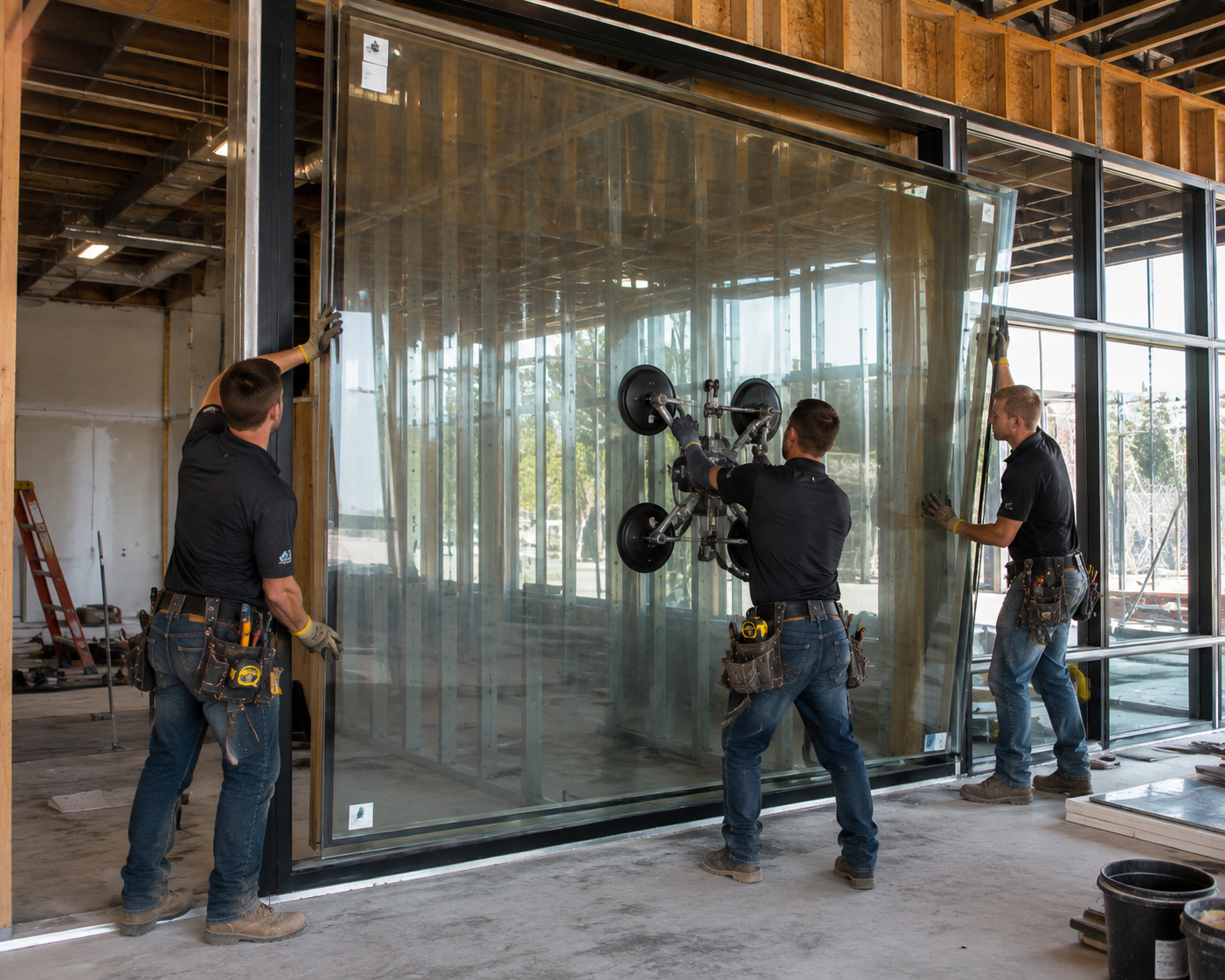
Austin Commercial Glass and Tenant Improvements
Austin’s commercial environment creates a different type of storefront project.
Office, technology, retail, restaurant, medical, entertainment, and mixed-use spaces frequently undergo substantial tenant improvements.
A new tenant may want more glass, a relocated entrance, different signage, interior glazing, or a completely different façade.
Those changes affect construction behind the storefront.
Interior walls, ceilings, flooring, lighting, electrical systems, access controls, and HVAC distribution all need to coordinate with the new exterior configuration.
Planning the glazing early helps prevent conflicts later in the build-out.
San Antonio Commercial Glass Repair
San Antonio combines newer commercial growth with a substantial inventory of existing buildings.
That creates opportunities for both targeted repairs and broader storefront modernization.
Older commercial openings may contain previous modifications that complicate new work.
Existing framing can hide abandoned fasteners, old sealants, damaged substrates, electrical wiring, or evidence of earlier water intrusion.
A repair should account for those conditions rather than assuming the opening remains exactly as originally constructed.
When necessary, restoration can prepare the opening before the new storefront components are installed.
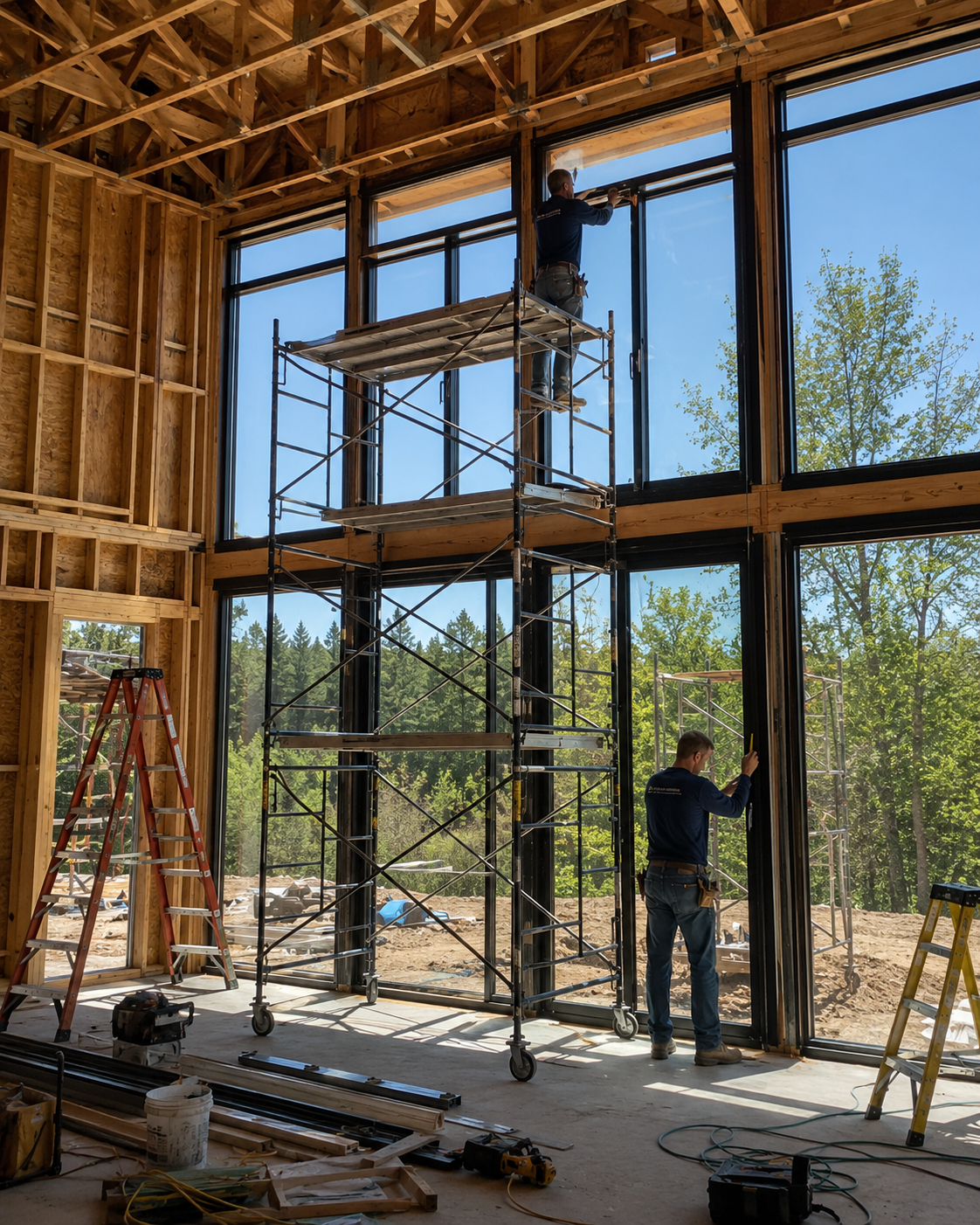
Commercial Glass and HVAC
Texas commercial properties rely heavily on air conditioning.
The storefront forms part of the exterior boundary that HVAC systems work against.
Large glazed areas, direct solar exposure, entrance traffic, occupancy, lighting, and interior equipment all influence cooling conditions.
A tenant improvement can change several of those variables simultaneously.
Walls move. Occupancy changes. New equipment is installed. The storefront may become larger.
HVAC distribution, zoning, thermostats, controls, and equipment should support the completed tenant space rather than simply preserve the previous configuration.
Rooftop HVAC and Roofing
Many Texas commercial buildings use rooftop mechanical equipment.
Tenant improvements can require new or modified rooftop units, exhaust equipment, curbs, duct connections, penetrations, and electrical feeds.
Every rooftop modification needs to maintain the integrity of the roof assembly.
That creates a direct connection between HVAC and roofing.
Meanwhile, construction below may include storefront replacement, ceilings, flooring, electrical work, painting, and other improvements.
Coordinating rooftop and interior work helps protect the completed tenant space.
Texas Commercial Energy Performance
Commercial glazing also participates in the larger energy performance of the building.
Glass, framing, doors, exterior walls, insulation, roofing, HVAC, and lighting all contribute to how a commercial property uses energy.
A storefront renovation can therefore be an opportunity to consider more than appearance.
Replacing failed insulated glass, improving deteriorated perimeter conditions, updating doors, or redesigning glazing during a tenant improvement can affect the relationship between the interior and exterior environments.
The objective is to create a storefront that works with the commercial building rather than against it.
Commercial Storefront Doors
Storefront doors experience significantly more mechanical use than fixed glazing.
High-traffic retail, restaurant, medical, and office entrances can cycle hundreds or thousands of times over relatively short periods.
Heat, dust, rain, wind, and everyday use add to those demands.
A door that drags, slams, fails to latch, or repeatedly requires adjustment may have problems involving pivots, closers, hinges, thresholds, locks, framing, or alignment.
Replacing door glass alone will not necessarily correct the underlying issue.
The entire entrance should be considered.
Aluminum Storefront Framing
Aluminum framing creates the structure around commercial storefront glass.
When the framing is damaged, what appears to be a simple glass replacement can become more complicated.
Bent members, damaged stops, failed gaskets, loose connections, deteriorated perimeter seals, and previous modifications can affect the new installation.
Vehicle impact deserves particular attention.
A storefront can absorb enough force to distort aluminum even when damage appears concentrated in one area.
Evaluating the complete opening helps determine what can remain and what should be replaced.
Insulated Commercial Glass
Insulated glass can play an important role in Texas commercial properties because of the substantial difference between exterior heat and conditioned interior space.
When an insulated unit loses its seal, haze or moisture can appear between the panes.
That condition cannot be corrected by cleaning the exterior surfaces.
Individual failed units can often be replaced when the surrounding system remains functional.
When failures become widespread, the age of the glazing, exposure of the elevation, condition of the framing, and future plans for the building can help determine whether broader replacement makes sense.

Electrical Systems Around Storefronts
Modern Texas storefronts frequently contain substantial electrical and low-voltage infrastructure.
Illuminated signs, architectural lighting, automatic doors, access controls, cameras, card readers, sensors, and digital displays can all interact with the glazing.
Tenant improvements can add even more electrical demand.
Retail displays, restaurant equipment, office technology, medical equipment, and new lighting can require extensive changes behind the façade.
Finalizing storefront and entrance locations early allows electrical infrastructure to be placed before walls and finishes are completed.
Signs and Exterior Lighting
Commercial signs are closely connected to storefront design.
A tenant change can require removing old signage, installing new electrical feeds, repairing exterior finishes, and repositioning lighting.
New storefront framing may also alter the visual proportions of the façade.
Planning glass, signs, electrical work, painting, and architectural finishes together can produce a more coherent result.
This is particularly useful in shopping centers where each tenant needs individual visibility while remaining compatible with the larger property.
Tenant Improvement Storefront Glass
Tenant improvements provide an opportunity to rethink an existing commercial storefront.
The previous tenant’s entrance may be in the wrong location. Window openings may not support the new floor plan. Existing framing may look outdated. Sign locations may no longer work.
Instead of preserving those limitations, the storefront can be designed around the new business.
Flooring can terminate correctly at entrances. Interior walls can align with framing. Electrical systems can support signs and doors. HVAC can respond to the finished glazing configuration.
The exterior and interior then become parts of the same renovation.
Plumbing and Changes of Use
Plumbing can dramatically reshape a commercial tenant improvement.
A retail suite becoming a restaurant may require kitchen plumbing, restrooms, drains, water heaters, and additional service.
Medical, salon, fitness, and other specialty uses can create their own requirements.
Plumbing locations influence the interior floor plan.
The floor plan influences reception, seating, counters, customer circulation, and accessible routes.
Eventually those decisions reach the storefront entrance.
That is why even trades that never physically touch the glass can influence how the storefront should be designed.
Painting and Exterior Restoration
A new storefront can make surrounding finishes appear older.
Faded paint, patched stucco, weathered masonry, old sign locations, and previous repairs may become much more noticeable next to new glass and aluminum.
Painting and exterior restoration help connect old and new construction.
Interior finishes can require similar attention.
Drywall, ceilings, soffits, columns, flooring, and painted walls may be disturbed during storefront replacement.
Completing these transitions properly makes the renovation look intentional instead of patched together.
Retail Storefront Glass Repair
Texas retail properties depend heavily on glass for customer visibility.
A damaged storefront can affect security, appearance, merchandise displays, and customer access at the same time.
Shopping-center projects can range from replacing one panel to reconstructing the entire façade for a new tenant.
Signs, lighting, electrical work, displays, flooring, doors, painting, and security systems may all intersect with the glazing.
Coordinating those scopes can produce a stronger retail renovation.

Restaurant Storefront Glass
Restaurant tenant improvements demonstrate how storefront glass can connect with nearly every major commercial trade.
The glass provides visibility and establishes the entrance.
Behind it, HVAC manages cooling, occupancy, and kitchen-related loads. Plumbing supports kitchens, bars, and restrooms. Electrical systems power cooking equipment, lighting, signs, and displays.
Ventilation can extend construction to the roof.
Roofing, fire protection, flooring, painting, and architectural finishes add further layers.
The storefront should support that complete commercial environment.
Office and Medical Glass
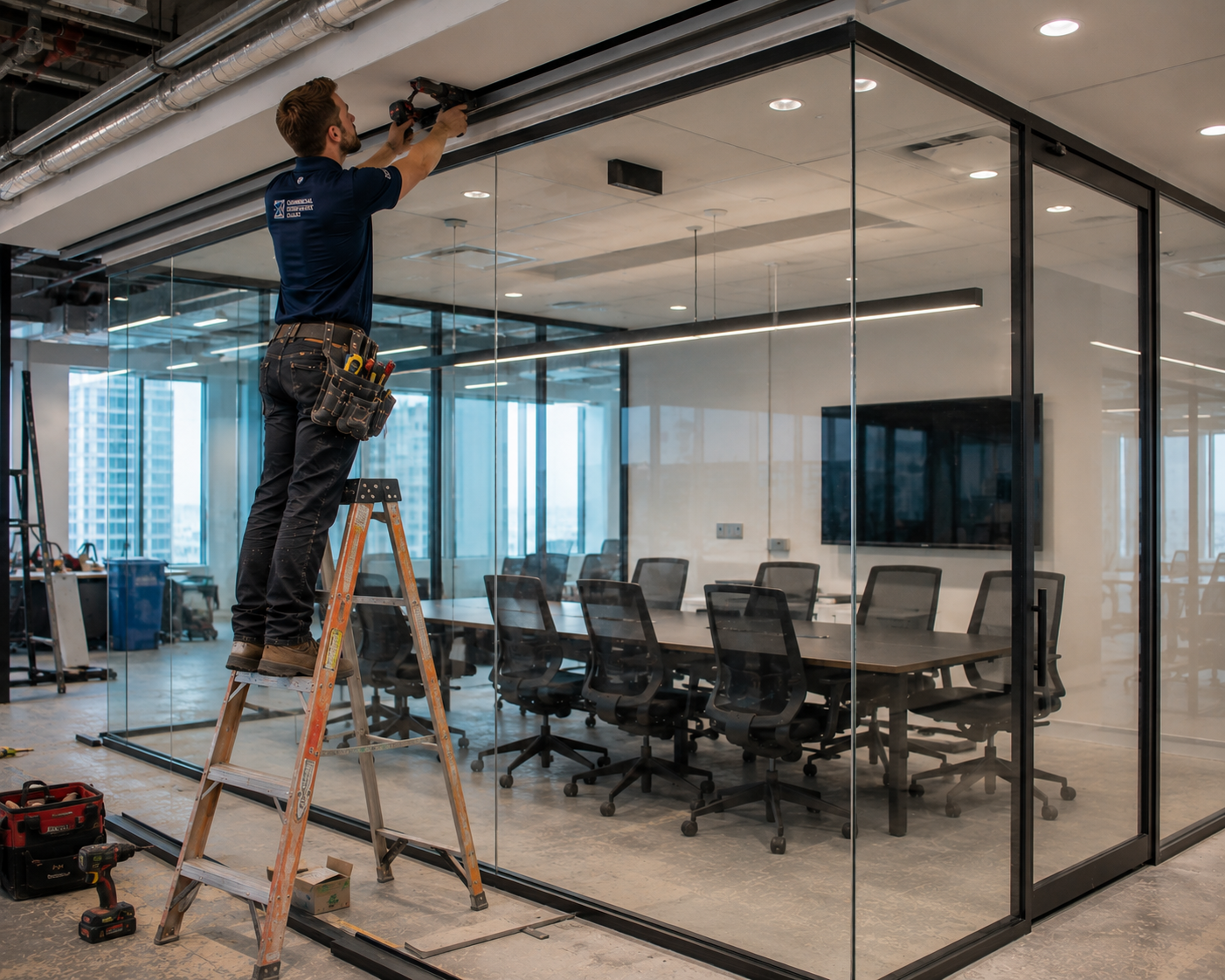
Office and medical projects can combine exterior storefront glazing with interior architectural glass.
Conference rooms, partitions, sidelites, reception glazing, interior doors, and other glass systems can become part of the same tenant improvement.
Medical facilities may also require extensive HVAC, electrical, plumbing, and accessibility modifications.
The exterior entrance needs to support the finished interior circulation.
Coordinating interior and exterior glazing can simplify construction while creating a more consistent architectural appearance.
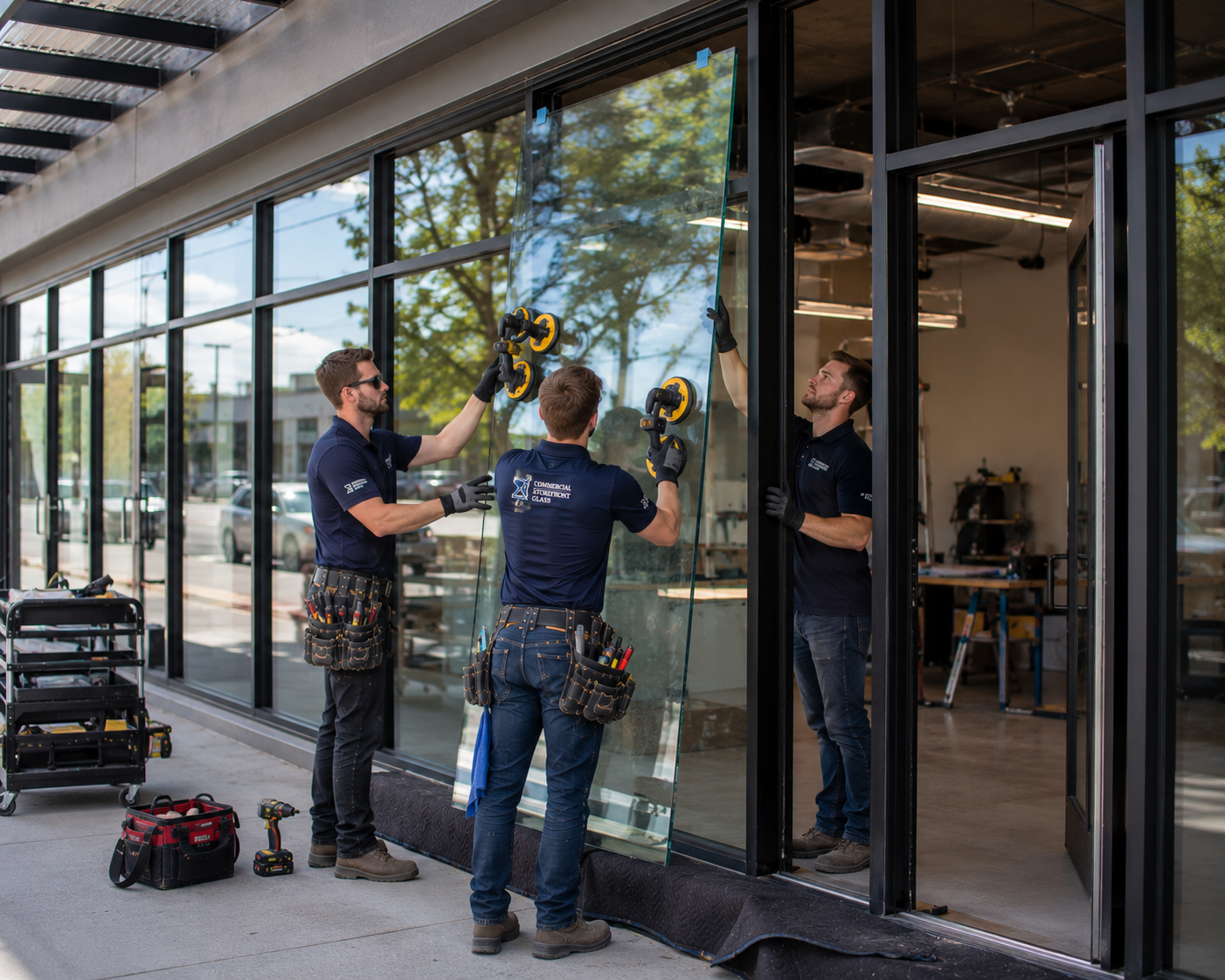
Emergency Commercial Glass Replacement
Some Texas glass damage requires an immediate response.
Vehicle impact, vandalism, severe storms, windborne debris, and other events can leave a commercial property exposed.
The first priority is creating a safe and secure condition.
Permanent repair can then consider the glass, framing, entrance system, and surrounding damage.
Severe events may affect aluminum framing, doors, electrical equipment, signs, interior finishes, and roofing as well as the glass.
The permanent solution should address the entire damaged area.
Repair or Replace the Storefront?
The appropriate decision depends on both present conditions and future plans.
One broken panel within a sound system can favor repair.
Multiple failed units, damaged framing, recurring entrance problems, water intrusion, storm damage, deteriorated seals, or an outdated configuration can point toward broader replacement.
An upcoming tenant improvement changes the calculation.
Instead of spending heavily to preserve a storefront designed for the previous business, the property can potentially create a new façade around the requirements of the incoming tenant.
Commercial Glass Repair Across Texas
BHG Storefront supports commercial glass and storefront projects throughout Texas, including Dallas, Fort Worth, Houston, Austin, San Antonio, Plano, Frisco, Irving, Arlington, McKinney, Corpus Christi, and surrounding commercial markets.
Conditions vary significantly across those areas.
Dallas–Fort Worth combines extreme heat with hail and severe storms. Houston adds humidity, heavy rain, and tropical weather. Austin has substantial tenant-improvement and redevelopment activity. San Antonio combines newer development with existing commercial properties. Coastal markets add hurricane, wind, and windborne-debris considerations.
The glazing strategy should reflect the actual property and location rather than treating every Texas storefront the same way.
A Complete Texas Commercial Glass Strategy
Commercial glass repair in Texas sits at the intersection of climate, construction, and building operations.
Glass faces intense solar exposure and severe storms. Aluminum framing supports entrances and exterior openings. HVAC works against substantial cooling loads. Roofing and waterproofing protect the commercial improvements below.
Along the Gulf Coast, wind and storm exposure introduce additional requirements. Elsewhere, hail and severe thunderstorms can create sudden property damage.
Electrical systems support signs, lighting, security, and entrances. Plumbing helps determine how new tenants use existing spaces. Restoration repairs damage extending beyond the glass. Painting and architectural finishes bring the entire renovation together.
Whether the project involves one broken storefront panel, a damaged entrance, failed insulated glass, storm restoration, complete storefront replacement, or a major tenant improvement, the strongest Texas commercial glass strategy looks at the entire building—not just the pane that needs repair.