
Commercial Glass Repair California
Commercial glass repair in California can involve much more than replacing a broken pane. Storefront systems combine glass, aluminum framing, entrance doors, hardware, sealants, surrounding finishes, and building-envelope components that all have to work together.
BHG Storefront supports commercial properties with glass repair, storefront replacement, glazing, entrance systems, and related tenant improvement work throughout California.
Projects can range from damaged retail storefronts and failing door glass to larger commercial renovations involving complete storefront systems. Offices, shopping centers, restaurants, medical facilities, industrial properties, mixed-use buildings, and other commercial environments each present different glazing requirements.
The first step is determining what actually needs repair and what should remain in place.
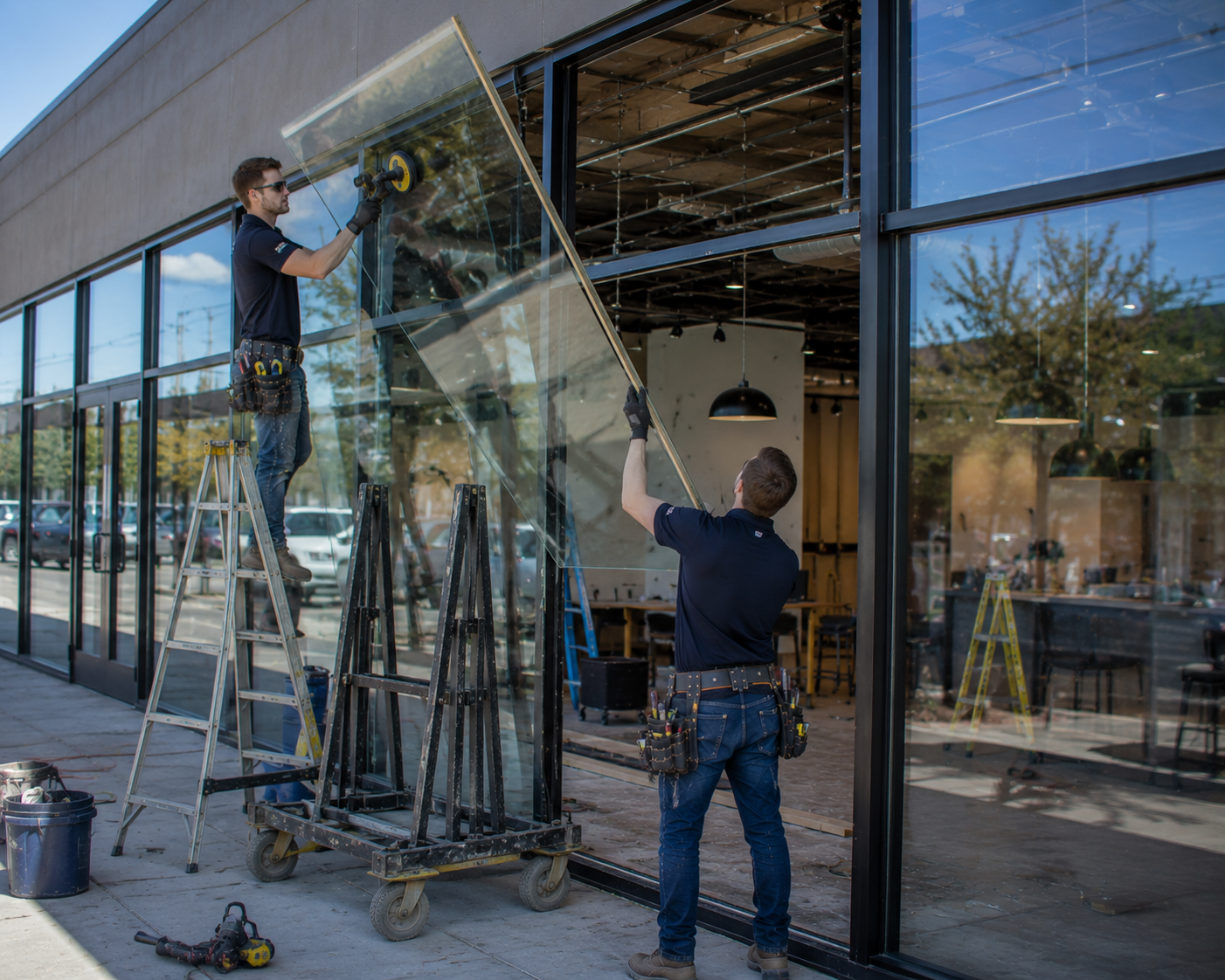
California Commercial Glass Repair
Commercial glass can fail for many reasons.
Impact damage is obvious, but other problems develop gradually. Glass can crack around stressed edges. Insulated units can lose their seals. Framing can deteriorate. Doors can become difficult to operate. Sealants can fail and allow moisture into surrounding construction.
Older commercial buildings may also have storefront systems that have been modified repeatedly.
A repair should account for those existing conditions rather than focusing only on the visible damage.
When the surrounding storefront remains serviceable, targeted glass repair or replacement may be appropriate. When framing, doors, waterproofing, or multiple components are deteriorating, a broader storefront renovation can provide a better long-term solution.
Broken Storefront Glass
Broken storefront glass creates an immediate problem for an operating business.
The opening can affect security, weather protection, customer access, and the appearance of the property. Damage near an entrance can also interfere with normal pedestrian traffic.
Commercial glass replacement begins with identifying the glass configuration, dimensions, framing conditions, and installation requirements.
Not every storefront uses the same product.
Existing systems can contain tempered glass, laminated glass, insulated glass, tinted units, oversized panels, and other architectural glazing. The replacement needs to match the requirements of the opening rather than simply filling the space.
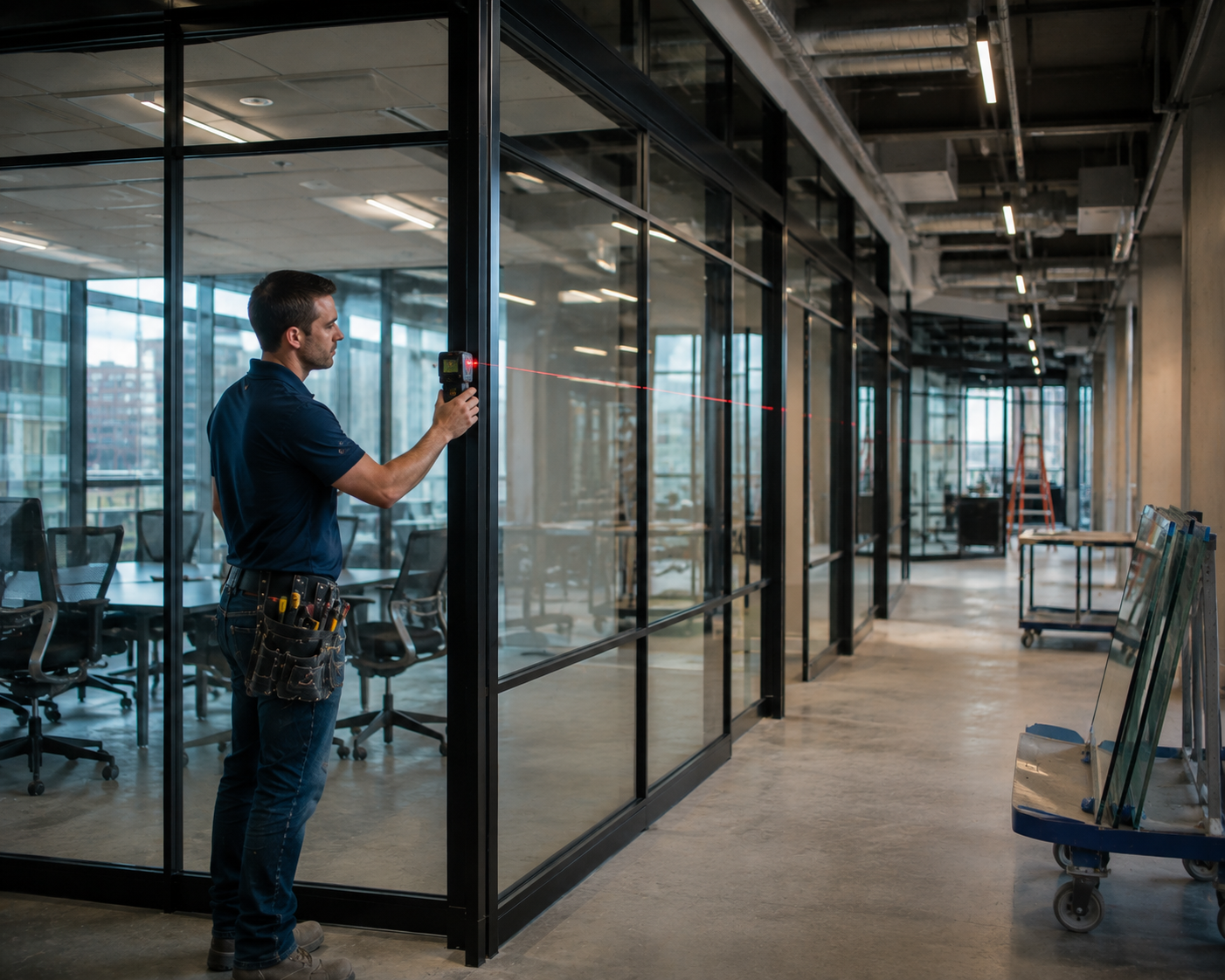
Storefront Glass Repair and Replacement
There is an important difference between replacing storefront glass and replacing the entire storefront.
A broken lite within otherwise functional framing may only require glass replacement. A storefront with deteriorated framing, recurring leaks, damaged entrances, multiple failed units, or an outdated configuration may justify a larger replacement.
The age of the system matters.
So does the future of the property.
If a tenant improvement is already planned, it can make more sense to coordinate storefront modernization with the renovation instead of repairing components that will soon be removed.
That allows the glazing scope to support the finished commercial space.
Commercial Storefront Doors
Storefront doors are often the most heavily used part of the glazing system.
Thousands of opening and closing cycles can affect pivots, closers, hinges, locks, thresholds, handles, and surrounding framing. Door alignment can change over time, making an entrance difficult to operate even when the glass itself remains intact.
Commercial glass repair should therefore include the entrance when symptoms point beyond the glazing.
A door that drags, fails to close correctly, strikes the frame, or repeatedly requires adjustment may have a hardware or framing issue.
Replacing glass without addressing the underlying entrance problem may leave the storefront functioning poorly.
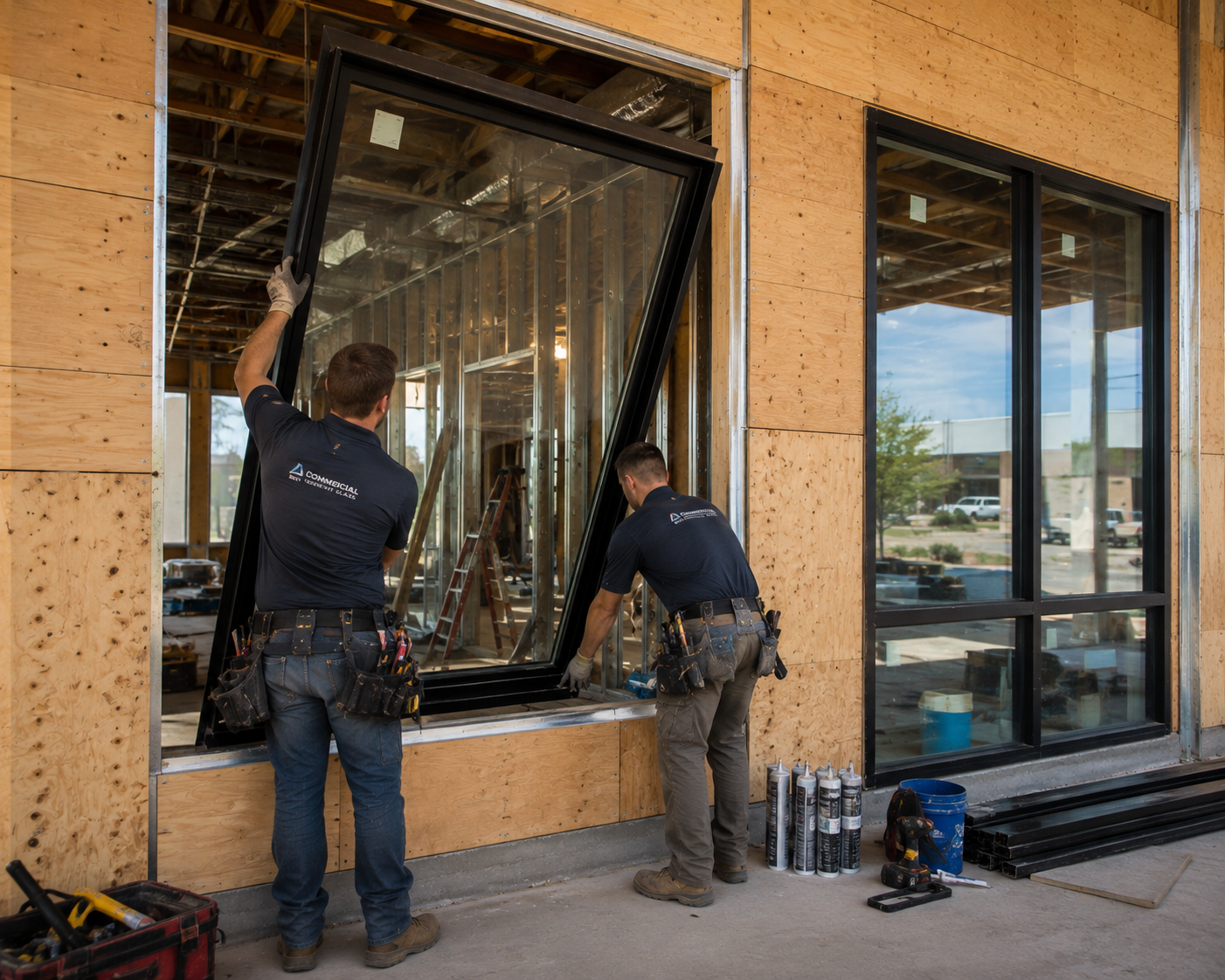
Aluminum Storefront Framing
Aluminum framing gives commercial storefront systems their structure and establishes the openings for glass and doors.
Damage to the framing can complicate what initially appears to be a straightforward glass repair.
Bent members, failed connections, corrosion, movement, damaged stops, and deteriorated perimeter conditions can affect the replacement installation.
Older framing may also reveal previous modifications after the glass is removed.
Evaluating the entire opening helps determine whether existing aluminum can remain or whether portions of the storefront need reconstruction.
Commercial Glass and Water Intrusion
Water appearing around commercial glass does not automatically mean the glass is leaking.
Moisture can enter at perimeter joints, wall transitions, flashing, canopies, parapets, roofing, penetrations, or other areas of the building envelope.
Water can then travel before becoming visible around the storefront.
Repeatedly applying sealant to the visible area may not correct the source.
Commercial glass repair involving moisture should consider the surrounding construction. Roofing, exterior finishes, waterproofing, framing, and glazing may all need to be evaluated before deciding where the failure originates.
Glass Repair After Water Damage
Water intrusion can create damage beyond the storefront system.
Drywall may deteriorate. Insulation can become wet. Flooring can be affected. Metal components may corrode, and painted surfaces can stain or peel.
That can turn a glazing project into a restoration project.
The source of the water should be addressed before damaged finishes are rebuilt. Storefront repairs can then be coordinated with drying, restoration, painting, drywall, flooring, or other necessary work.
Repairing the visible glass while leaving wet or damaged materials concealed behind finishes can create additional problems later.
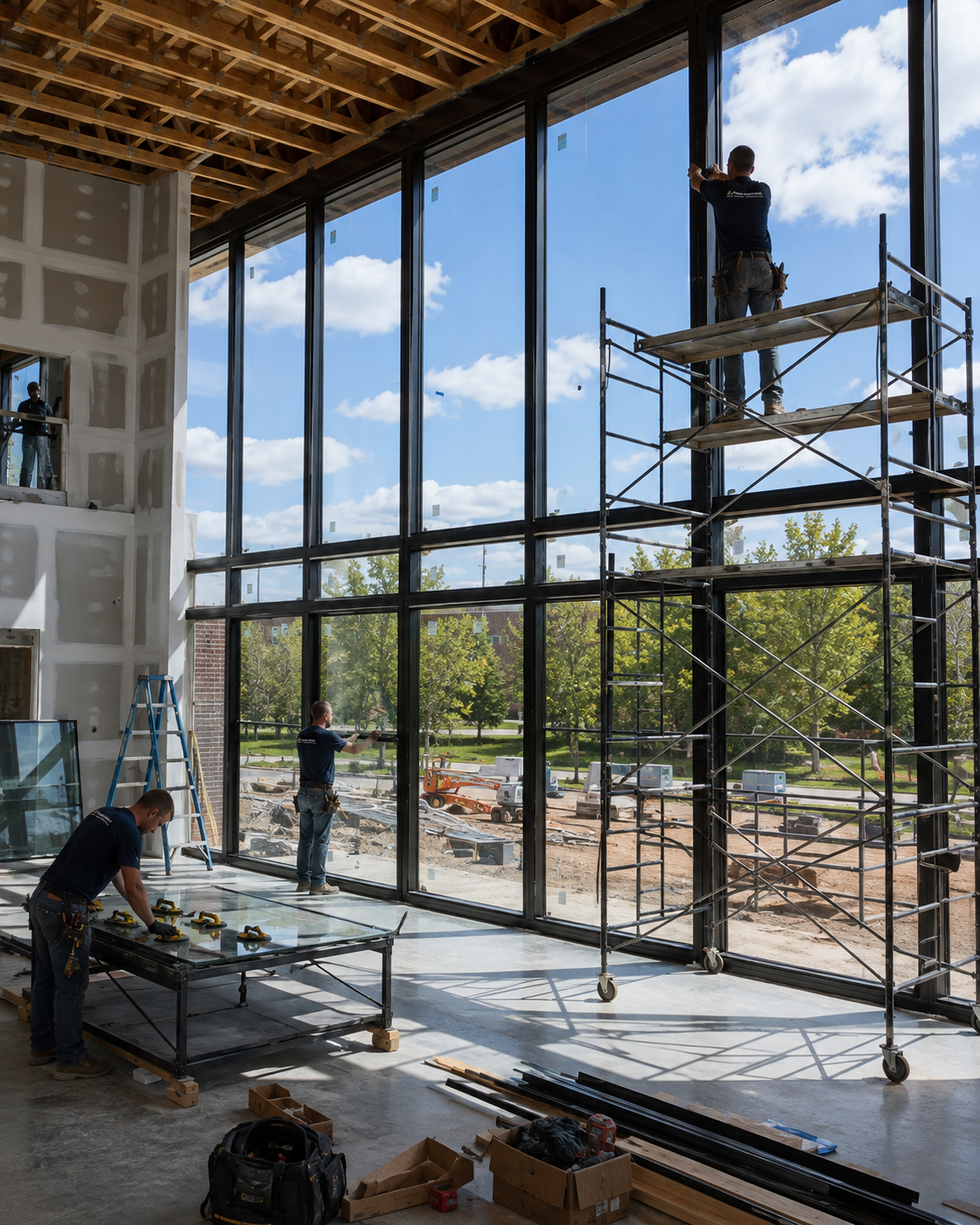
Commercial Glass and Roofing
Storefront glass and roofing may seem like unrelated trades, but both protect the building envelope.
A roof leak can sometimes present itself near windows or storefront framing far below the original point of entry.
Parapets, roof edges, drainage conditions, flashing, and wall transitions deserve attention when moisture repeatedly appears around exterior glazing.
This relationship becomes particularly important during larger commercial renovations.
When roofing and storefront work are both required, coordinating the two scopes can help protect the interior improvements being made below.
Commercial Glass During Tenant Improvements
Tenant improvements create an ideal opportunity to evaluate an existing storefront.
A new tenant may want larger windows, different entrance locations, upgraded doors, new framing, improved visibility, or a completely redesigned façade.
Those changes connect directly to the interior build-out.
Drywall may terminate against new framing. Flooring needs to meet entrance thresholds correctly. Electrical work can be required for signs, access control, automatic doors, or lighting. HVAC conditions can change when exterior glazing is modified.
Treating storefront glass as part of the TI allows these details to be resolved together.
Electrical Systems Around Commercial Storefronts
Modern storefronts frequently contain electrical and low-voltage components.
Illuminated signs, architectural lighting, automatic door operators, access controls, cameras, card readers, sensors, and digital displays may all be installed around the glazing system.
Repair or replacement can affect their locations.
When a storefront is being substantially reconstructed, electrical work should be coordinated before surrounding walls and finishes are completed.
Planning ahead makes it easier to conceal conduit and wiring while keeping devices properly positioned around the finished entrance.
HVAC and Exterior Glass
Exterior glazing influences the environment inside a commercial property.
Large glass areas receive solar exposure and create different thermal conditions than insulated walls. Orientation, shading, glass configuration, and door traffic can all affect conditions near the perimeter.
This becomes especially relevant when storefront replacement occurs during a tenant improvement.
The HVAC system may also be changing to support a new floor plan or business use.
Mechanical design and exterior glazing should ultimately support the same finished environment rather than being planned independently.
Painting and Storefront Restoration
Installing new commercial glass can make the surrounding façade look noticeably older.
Existing paint may be faded. Stucco can contain previous repairs. Old sign locations may remain visible. Interior walls around the storefront may need patching after framing or door work.
Painting and finish restoration help integrate the repaired storefront with the rest of the property.
The objective is for the completed work to appear intentional.
That can require attention to exterior coatings, drywall, trim, ceilings, soffits, and other surfaces surrounding the glazing.
Retail Storefront Glass Repair
Retail storefronts depend heavily on visibility and customer access.
Broken glass, damaged doors, cloudy insulated units, deteriorated framing, or temporary repairs can directly affect the appearance of the business.
Retail renovations may also include display windows, entrance modifications, signs, lighting, and interior improvements.
Coordinating these elements can turn a basic repair into a more effective storefront upgrade.
For shopping centers and multi-tenant properties, maintaining a consistent architectural appearance may also influence the replacement system and finish selection.
Restaurant Storefront Glass
Restaurants place different demands on commercial storefront systems.
Entrances experience frequent traffic. Large glazed areas contribute to the dining environment. Interior layouts may place seating directly against exterior glass.
Restaurant tenant improvements can also involve extensive HVAC, electrical, plumbing, fire protection, and roofing work.
A storefront renovation should fit into that larger construction plan.
Entrance configuration, glass locations, signs, lighting, and interior circulation all need to work with the finished restaurant rather than the previous tenant’s layout.
 Office and Medical Glass Repair
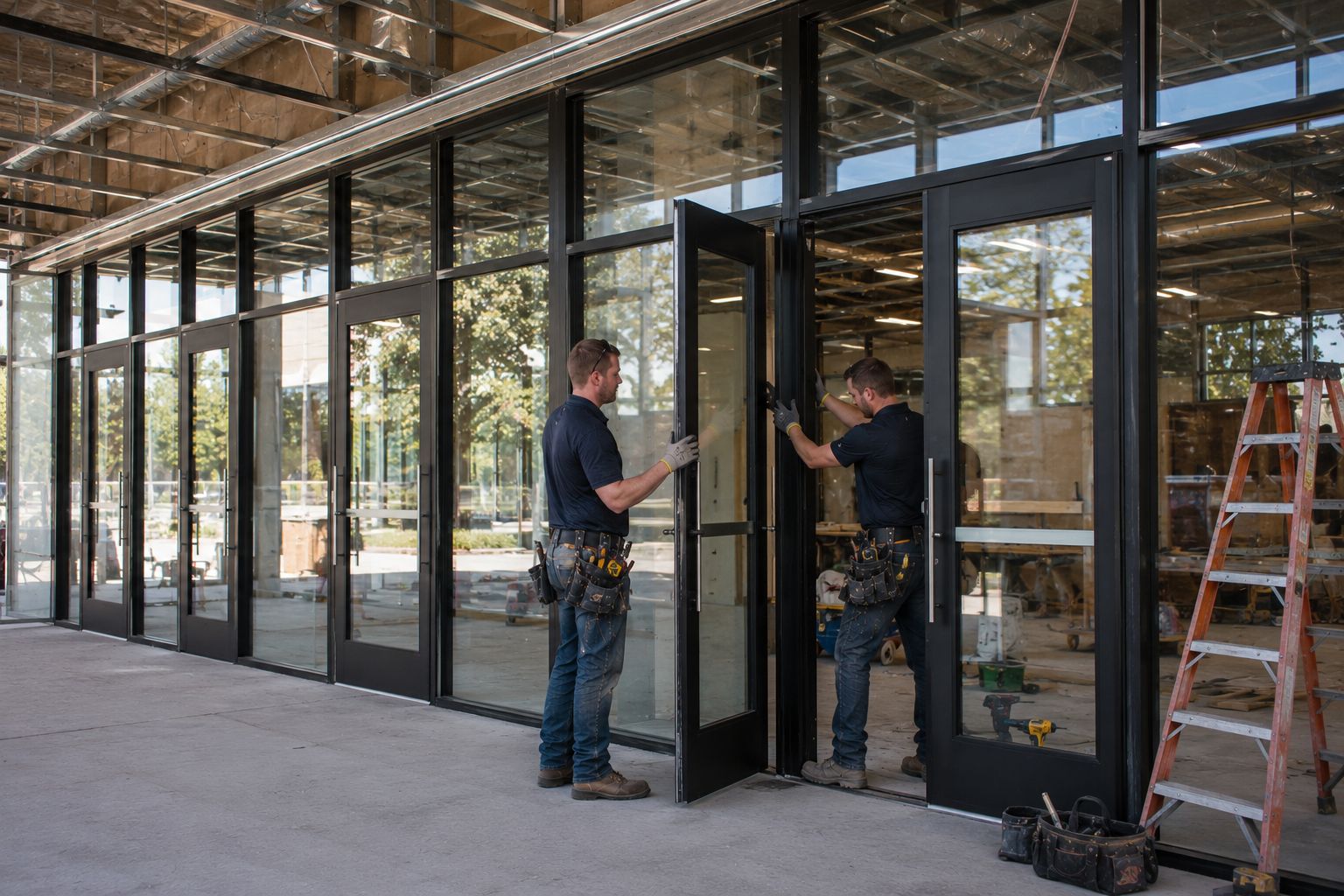
Office and medical properties may use storefront glazing at exterior entrances as well as within interior commercial spaces.
Exterior repairs can involve glass, framing, doors, and entrance hardware. Larger renovations may introduce glass conference rooms, sidelites, interior partitions, reception glazing, or updated entrance systems.
Medical spaces can add another level of coordination because the tenant improvement may significantly change plumbing, electrical, HVAC, accessibility, and interior circulation.
Planning the glazing with those scopes can reduce conflicts during construction.
Emergency Commercial Glass Replacement
Some commercial glass damage cannot wait for a planned renovation.
Vehicle impact, vandalism, severe breakage, entrance damage, and other unexpected events can leave a property exposed.
The immediate priority is making the affected area safe and secure.
Permanent replacement can then be based on the existing storefront configuration, glass requirements, framing condition, and extent of damage.
If the impact also damaged aluminum framing, doors, adjacent finishes, or other building components, the repair scope may need to extend beyond the glass itself.
Repair or Replace the Storefront?
Not every damaged storefront needs complete replacement.
The decision should consider the extent of damage, age of the system, condition of the framing, entrance operation, history of water intrusion, availability of compatible components, and future plans for the property.
A localized failure may favor repair.
Multiple failures can point toward replacement.
An upcoming tenant improvement may change the equation entirely because the storefront can be redesigned around the future business instead of preserving an outdated configuration.
The best solution is the one that addresses the actual condition of the property.
Commercial Glass Repair Across California
California commercial properties range from dense urban storefronts and shopping centers to suburban offices, restaurants, medical facilities, industrial buildings, and mixed-use developments.
BHG Storefront supports commercial glass and storefront projects throughout major California markets, including the Bay Area, San Jose, San Francisco, Oakland, San Rafael, Palo Alto, Sacramento, Los Angeles, Orange County, San Diego, and surrounding commercial areas.
Every market has different buildings and project conditions.
The underlying approach remains consistent: evaluate the glass, framing, entrances, surrounding construction, and larger renovation before determining the appropriate scope.
A Complete Approach to Commercial Glass Repair
Commercial glass repair is most effective when the storefront is viewed as part of the complete building.
Glass fills the opening. Aluminum framing supports the system. Doors provide access. Sealants and surrounding construction help manage weather. Roofing and waterproofing protect the envelope above. HVAC influences conditions behind the glass. Electrical systems support entrances, signs, lighting, and security.
Tenant improvements connect those systems with the finished interior.
For California commercial properties, that broader perspective can turn an isolated glass repair into a more coordinated solution—whether the project involves one damaged panel, an entrance system, a storefront replacement, or a complete commercial renovation.