
Dallas tenant improvements move fast, and storefront glass is one of the items most likely to hold them up. In Deep Ellum, Uptown, Bishop Arts, and the shopping centers along the Dallas North Tollway, new tenants want to open as soon as possible. The general contractor runs the schedule, but the glazier controls one of its longest lead items. When these two teams work closely, the storefront arrives on time and fits the first time. When they do not, the opening date slips. Here is how to coordinate storefront glass with your general contractor.
Tenants, project managers, and building owners can use these steps to keep the glass from becoming the bottleneck.
Why Glass Drives Dallas Tenant Improvements
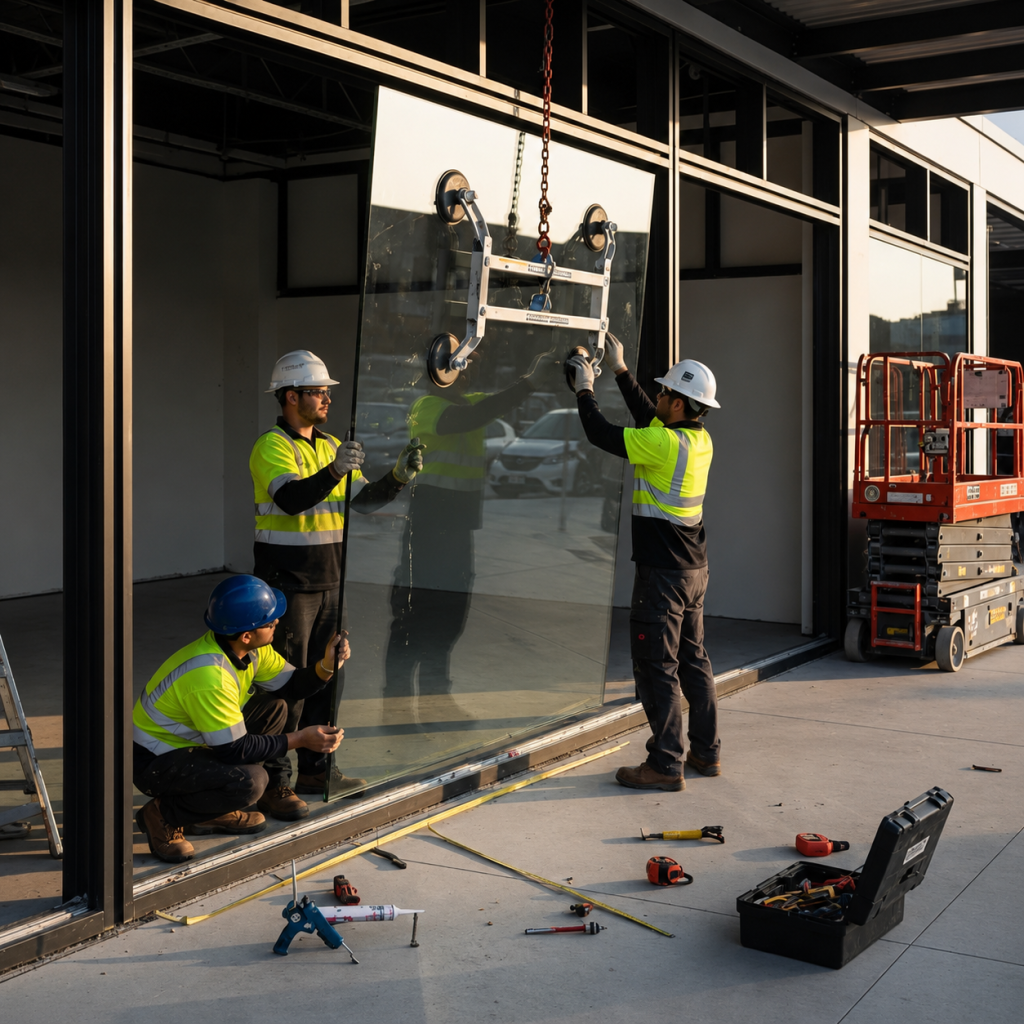
You can buy most finishes off the shelf. Storefront glass is different. A plant cuts and tempers each panel to size, and the shop fabricates frames to fit. As a result, lead times often run several weeks. In addition, the storefront closes up the space, so many inside trades wait for it. That makes glass a critical path item in most Dallas tenant improvements.
Bring the Glazier In Early
The best time to involve the glazier is during design. They can suggest frame systems, door hardware, and glass types that fit the budget and schedule. Also, they can flag long-lead items before they cause trouble. In contrast, a glazier brought in after permits may find the design hard to build. Early input saves time and money.
Dallas Tenant Improvements and the Lease
Start by reading the lease and the landlord’s work letter. Some landlords deliver a new storefront. Others hand that job to the tenant. Many centers also control frame color, glass tint, and sign zones. So the general contractor and glazier should know these rules before pricing. Clear answers prevent change orders later.
Shop Drawings and Submittals
After design, the glazier prepares shop drawings. They show exact sizes, frame profiles, anchors, door hardware, and glass types. The general contractor reviews them and sends them to the architect and landlord. Each reviewer may mark changes. So build time for this loop into the schedule. Quick reviews keep the glass order moving.
Dallas Tenant Improvements and Lead Times
Once everyone approves the shop drawings, the glazier places the order. Standard systems may arrive in a few weeks, while custom finishes and special glass take longer. Supply delays can stretch these times further. So the general contractor should ask for current lead times at the start and update the schedule when they change. Our post on Dallas storefront installation quotes covers what affects pricing and timing.
Field Measuring the Openings
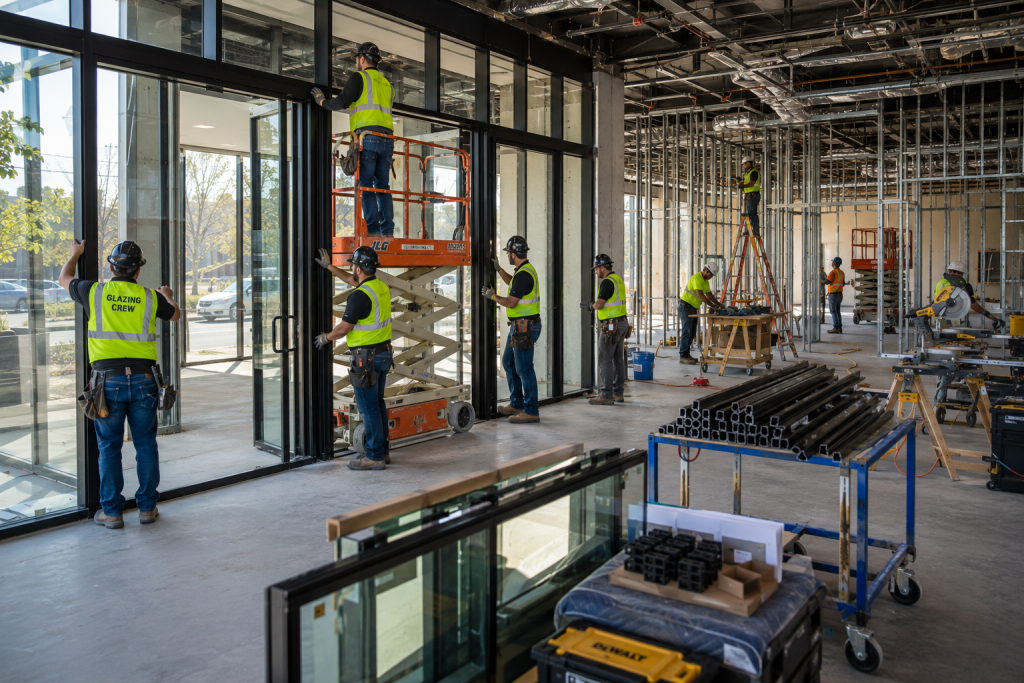
Glass must fit the real openings, not just the drawings. So the glazier takes field measurements once the framers finish the rough openings. In older Dallas buildings, openings are often out of square or uneven. Measuring at the right time prevents glass that arrives too big or too small. The general contractor should tell the glazier as soon as openings are ready.
Sequencing Dallas Tenant Improvements on Site
Work flows best in a set order. First, crews handle demolition and framing. Next, rough electrical and plumbing go in. Then the glazing crew sets the storefront, which seals the suite. After that, drywall, ceilings, paint, and flooring follow. Finally, fixtures and signs arrive. In this order, the storefront protects the inside work from weather and theft.
Dallas Tenant Improvements and Other Trades
Automatic doors, card readers, and alarm contacts all need power at the frame. So the electrician pulls those wires before the frames go up. In addition, sign installers need to know where the storefront header ends. The security company may need door contacts placed during the install. The general contractor should bring these trades together before install day.
Install Day Logistics
Install day needs a clear, safe work zone. Delivery trucks need access, and large panels may need a lift. In busy centers, landlords may limit work hours or block parking spaces. So the general contractor should confirm access with the property manager. In addition, Texas heat can make afternoon work hard, so many crews start early.

Protecting the Glass
New glass scratches easily. So cover it with protective film during messy work like drywall sanding. In addition, keep welding and grinding away from finished glass. Sparks can etch the surface for good. The general contractor should remind all trades to take care around the new storefront.
Dallas Tenant Improvements Permits and Inspections
Dallas building permits for tenant improvements include the storefront. Reviewers check the plans for glass types, hardware, exit paths, and energy forms. The city inspector checks safety glass labels and door hardware during inspections. You can find permit information on the Dallas City Hall website. Leave the rating stickers in place until the inspector signs off.
Handling Changes
Late changes to the storefront are costly. After the plant cuts the glass, a new size or color means a full remake. That is why the tenant and landlord should approve the final design before the order goes in. If the team truly needs a change, the general contractor and glazier should agree on cost and timing in writing before work proceeds.
Punch Lists and Closeout
Near the end, the general contractor walks the space with the tenant and makes a punch list. Glass items often include scratches, door adjustments, and missing caulk. The glazier should fix these quickly so the tenant can open. In addition, the glazier hands over warranties, care instructions, and spare keys. A clean closeout leaves everyone ready for the next project. It also starts the tenant’s warranty period on the right foot.
Communication Habits That Help
Simple habits keep the project on track. For example, include the glazier in weekly meetings, share an updated schedule, and post a single list of open questions. In addition, name one contact on each side for quick answers. Clear communication turns surprises into small fixes instead of big delays.
Dallas Tenant Improvements in Summer Heat
Dallas summers are long and hot. Sealants, gaskets, and workers all feel the heat. So crews often start at sunrise and wrap up exterior work by early afternoon. In addition, glass stored in direct sun can get hot enough to cause problems during handling. The general contractor should plan a shaded staging spot for glass deliveries. Small steps like these protect both the product and the crew.
Choosing a Glazing Partner
Pick a glazier who works with general contractors on Dallas tenant improvements every week. Ask about their shop drawing turnaround, current lead times, and crew size. Also, ask for references from recent projects. Our Texas commercial glass team supports general contractors across the Dallas area.
Coordination Checklist
- Bring the glazier in during design
- Review the lease and center rules
- Turn shop drawings around quickly
- Confirm lead times and update the schedule
- Field measure once the framers finish
- Run power for doors and security first
- Plan access and protect the glass
- Keep labels on until inspection
Keep Your Opening Date on Track
When the general contractor and glazier plan together, storefront glass stops being a risk and becomes a smooth step in the schedule. With early input, quick reviews, and clear communication, your Dallas project can open on time. Visit our storefront installation page or call our team to begin.