
Las Vegas window installation on a sun-exposed building is all about controlling heat. Offices, medical centers, schools, and retail buildings across the valley face some of the strongest sunshine in the country. Glass that works fine in a mild climate can turn a Las Vegas office into an oven by mid-afternoon. The right glass keeps rooms bright and comfortable while cutting cooling bills. The wrong glass leads to glare, faded furniture, and unhappy tenants. Here is how to choose glass for commercial windows that face the desert sun.
Building owners, facility managers, and architects can use these points to compare options before ordering.
Why Sun Exposure Changes Everything
Las Vegas averages well over 3,800 hours of sunshine a year. South and west walls take the most heat, especially in late afternoon. As a result, those windows let in far more energy than north-facing glass. That heat drives up air-conditioning loads and makes rooms near windows uncomfortable. So the glass on each side of a building may need different performance.
Key Ratings for Las Vegas Window Installation
Three numbers help you compare glass. First is SHGC, short for solar heat gain coefficient. It measures the share of the sun’s heat that gets through, and in Las Vegas you want a low number. The U-factor shows how much heat flows through the glass because of temperature differences. Visible transmittance shows how much daylight gets in. The National Fenestration Rating Council rates these values so you can compare products fairly.
Low-E Coatings Explained
A low-E coating is a microscopically thin metal layer on the glass. This layer bounces heat away yet keeps rooms bright. Standard low-E helps in many climates. However, for Las Vegas, a solar control low-E coating works much better because it blocks more of the sun’s heat. In addition, some coatings have a slight tint that also cuts glare.
Spectrally Selective Glass
Spectrally selective glass goes one step further. It lets in visible light but blocks most infrared heat and ultraviolet rays. As a result, rooms stay bright without the heat. This glass is a strong choice for offices, classrooms, and clinics where people sit near windows. It also protects furniture and finishes from fading.
Tinted and Reflective Glass
Tinted glass absorbs some solar energy and reduces glare. Reflective glass bounces sunlight away, giving a mirror-like look from outside. Both lower heat gain. However, they also reduce daylight and can change how the building looks. In addition, some communities limit reflective glass to protect neighbors and drivers. So check local rules and the building owner’s standards.

Las Vegas Window Installation With Insulated Units
An insulated unit pairs two panes around a sealed gap. That space slows heat flow. Adding argon gas improves performance further. When you combine insulated units with a solar control coating, you get strong protection from both heat and glare. Most new commercial windows in Las Vegas use this combination.
Las Vegas Window Installation and Daylight
Blocking heat should not mean living in the dark. Good solar control glass still lets plenty of daylight in. More daylight means fewer lights on during the day, which saves even more power. So look for glass with strong heat control and a healthy visible transmittance. Your glazier can show samples side by side.
Frames Matter Too
The frame matters as much as the pane. Aluminum frames conduct heat, so thermally broken frames make a big difference. In addition, frame color affects how hot the metal gets. Lighter finishes stay cooler in direct sun. Ask your glazier to show frame options that pair well with your chosen glass.
Las Vegas Window Installation for Each Facade
Not every wall needs the same glass. For example, north-facing windows get little direct sun, so clearer glass can bring in more daylight. South and west windows need the strongest heat control. East windows face morning sun, which is milder but still strong. Matching glass to each facade balances comfort, light, and cost.
Glare Control for Comfort
Glare makes screens hard to read and causes eye strain. Even with good glass, interior shades or light shelves help on the sunniest walls. In addition, exterior shading, such as overhangs and fins, blocks high summer sun before it reaches the glass. Combining glass with shading gives the best results.
Las Vegas Window Installation for Schools and Clinics
Schools and clinics have special needs. Classrooms need daylight for learning but not glare on screens and whiteboards. Exam rooms need privacy as well as light. So these buildings often mix clear glass up high with frosted or tinted glass below. In addition, laminated glass adds safety in busy hallways and play areas. Matching glass to each room keeps people comfortable and safe.
Energy Savings and Incentives
Better glass can lower cooling costs, which make up a large share of commercial energy bills in Las Vegas. In addition, NV Energy sometimes offers programs for efficiency upgrades. Check the NV Energy website for current business programs. Savings over the life of the windows often cover part of the higher upfront cost.
Las Vegas Window Installation and Codes
Energy codes in Southern Nevada set limits for window performance in new buildings and major renovations. Your design team will choose glass that meets these values. In addition, Clark County and the City of Las Vegas review window plans as part of building permits. A licensed contractor will handle the required submittals.
Replacing Windows in Occupied Buildings
Many window projects happen while tenants stay at work. So crews replace a few openings at a time and seal each one before moving on. In addition, they protect desks and floors near the work. Clear notices help tenants plan around noise and access. Good planning keeps the building running while the new glass goes in.
Installing in Desert Conditions
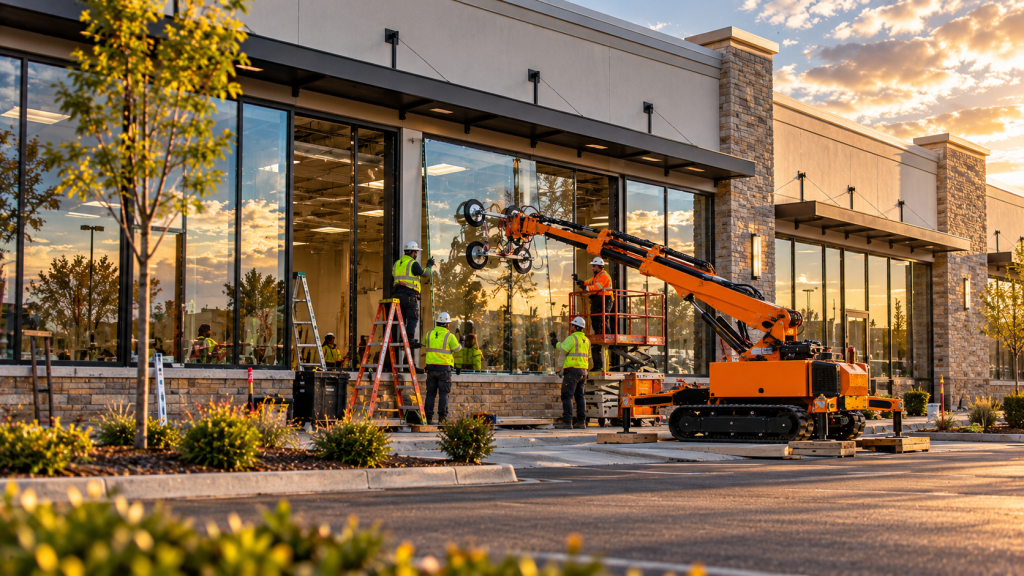
Installation itself must suit the climate. Sealants need the right temperatures to cure, so crews often work early in the day during summer. In addition, wind and dust can make handling large panes risky. Experienced crews plan around the weather to protect both the glass and the workers. Our commercial glass window page explains our process.
Bird Safety and Reflections
Highly reflective glass can confuse birds, especially near parks and green spaces. Some owners add patterned or fritted glass to make the surface visible to birds. In addition, fritted glass can reduce heat and glare. It is worth asking about if your building faces open land or a landscaped courtyard.
Budgeting for High-Performance Glass
High-performance glass costs more than basic clear glass. However, it can reduce cooling bills, improve tenant comfort, and protect interiors. In addition, buildings with better comfort often lease faster. So weigh the upfront cost against long-term savings and value. Ask for prices on two or three glass options to compare.
Las Vegas Window Installation Checklist
- Map which walls get the most sun
- Compare SHGC, U-factor, and daylight ratings
- Choose solar control or spectrally selective low-E
- Use insulated units with argon gas
- Pick thermally broken, light-colored frames
- Add shading or shades for glare
- Check codes and utility programs
- Schedule installs for cooler hours
Beat the Desert Sun
The right glass turns a sun-baked building into a bright, comfortable place to work. With careful choices for each wall, solid frames, and expert installation, your Las Vegas building can stay cooler and cost less to run. Learn more on our Nevada glass services page. You can also talk with our team about your building.