
Commercial Glass Repair Nevada
Commercial glass repair in Nevada involves conditions that are different from many other parts of the country. Intense solar exposure, desert heat, large temperature swings, wind-driven dust, high cooling demands, and heavily used commercial entrances can all influence how storefront glass and aluminum systems perform over time.
BHG Storefront supports commercial properties with glass repair, storefront replacement, glazing, entrance systems, and related tenant improvement work throughout Nevada.
Projects can range from damaged retail storefront glass in Las Vegas to entrance repairs, failed insulated units, aluminum framing problems, tenant improvement glazing, and complete storefront modernization.
The goal is not simply to replace damaged glass. It is to understand why the system failed and how the storefront interacts with the Nevada building around it.
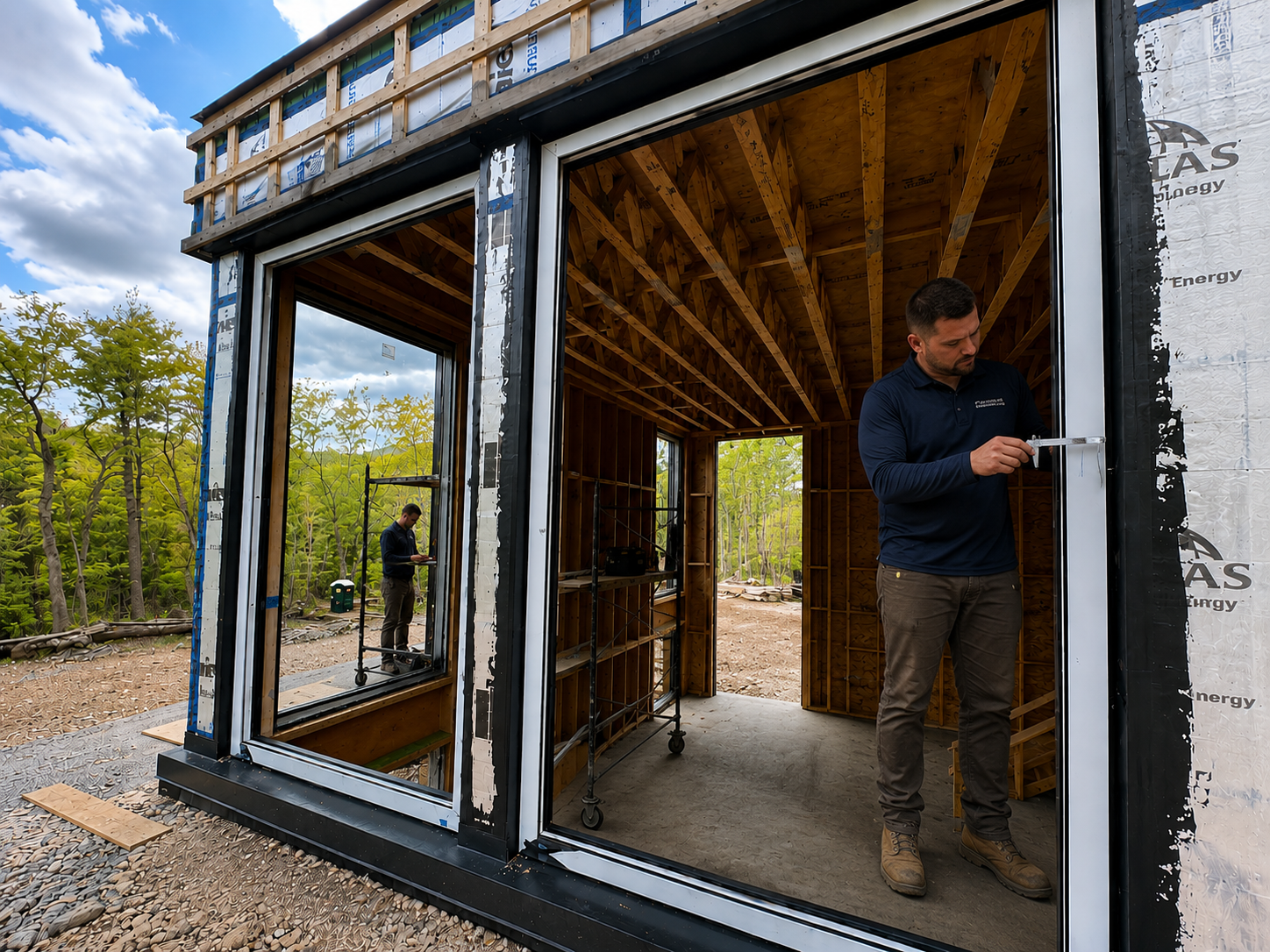
Nevada Commercial Glass Repair
Commercial glass can fail suddenly or gradually.
Impact damage, vandalism, vehicle strikes, damaged doors, cracked glass, failed seals, deteriorated perimeter joints, and framing problems can all require attention.
Nevada adds another factor: prolonged exposure to an extreme desert environment.
Storefront systems can spend years exposed to powerful sunlight and high exterior surface temperatures. Sealants, gaskets, coatings, hardware, and surrounding materials may age differently from components protected inside the building.
A commercial glass repair should therefore consider the entire opening rather than focusing only on the visible crack or failed panel.
Desert Heat and Commercial Glass
Heat is one of the defining considerations for commercial glass in Nevada.
Exterior glass and aluminum framing exposed to direct sunlight can become extremely hot while the interior side remains conditioned by the building’s HVAC system.
Those different conditions place demands on the glazing assembly.
Glass selection, framing, perimeter conditions, shading, orientation, and the size of the glazed area can all influence storefront performance.
A west-facing Las Vegas storefront receiving intense afternoon sun experiences a different environment from a shaded entrance beneath a deep canopy.
Understanding that exposure becomes particularly important when repairing recurring problems or replacing a larger storefront system.
Thermal Stress and Temperature Changes
Nevada is associated with heat, but commercial glazing also experiences substantial temperature changes.
Glass can be exposed to intense daytime solar heating while the building interior remains heavily air-conditioned. Seasonal and overnight temperature changes create additional movement within the storefront assembly.
Glass, aluminum, sealants, adjacent walls, and other materials do not necessarily expand and contract at identical rates.
That movement is one reason proper installation conditions matter.
When evaluating unexplained cracking or repeated sealant problems, the surrounding framing and building conditions deserve attention along with the glass itself.
Broken Storefront Glass
Broken commercial glass creates immediate concerns for security and public access.
A damaged storefront can expose merchandise, equipment, employees, or interior spaces. Glass near an entrance may also interfere with normal customer traffic.
The permanent replacement needs to match the requirements of the opening.
Nevada commercial properties can contain tempered glass, laminated glass, insulated glass, tinted units, oversized panels, and other architectural glazing.
Identifying the existing system correctly is more important than simply measuring the visible opening.
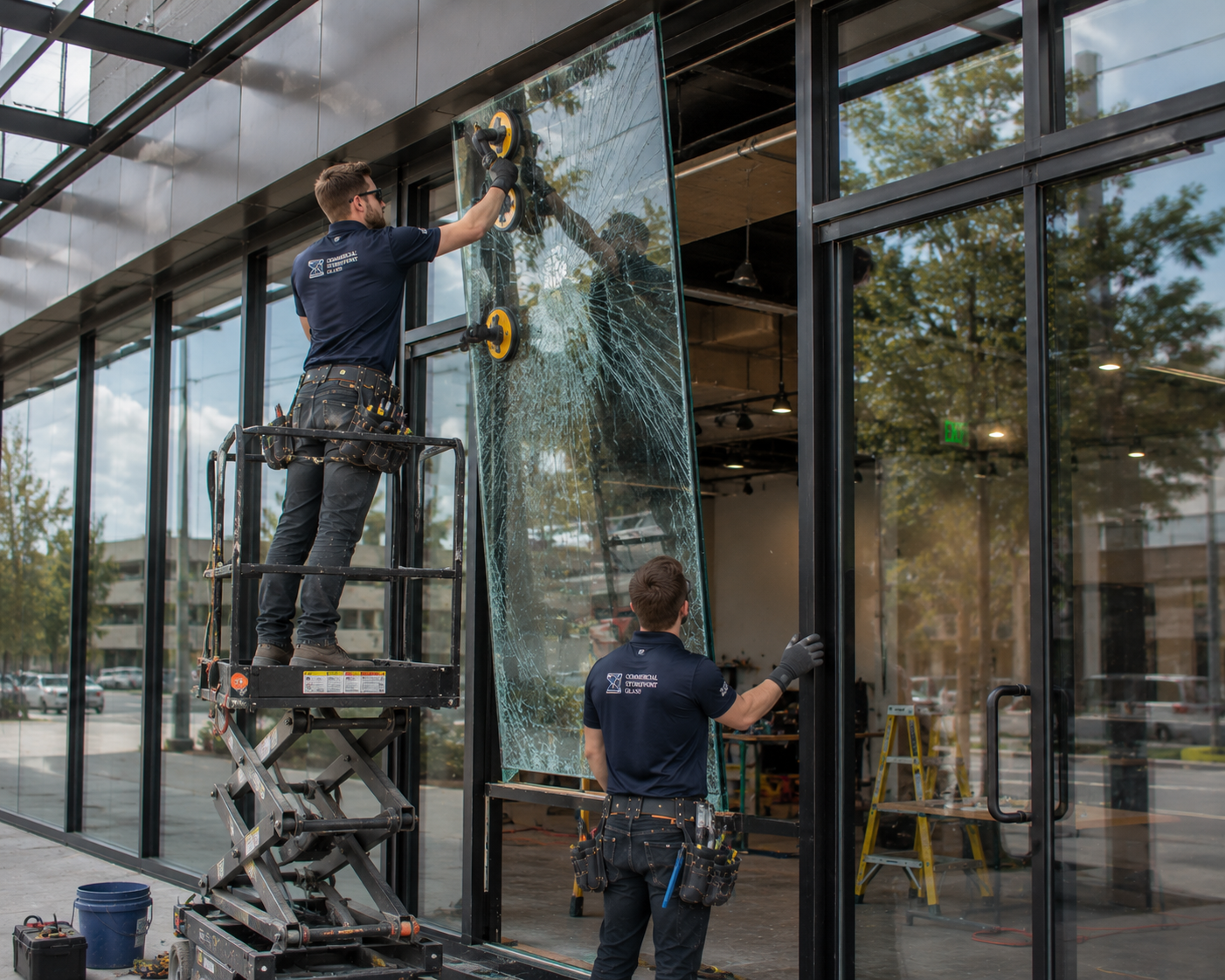
Storefront Glass Repair and Replacement
A damaged glass panel does not automatically require an entirely new storefront.
If the aluminum framing, entrance system, and surrounding construction remain serviceable, replacing the affected glazing may be appropriate.
Other situations point toward a larger renovation.
Multiple failed units, deteriorated framing, recurring water intrusion, failing doors, damaged perimeter conditions, or an outdated storefront configuration may make replacement worth considering.
Future construction matters too.
If the property is preparing for a tenant improvement, the storefront can potentially be redesigned around the new business rather than repairing a system scheduled to be changed later.
Las Vegas Storefront Glass
Las Vegas creates some of Nevada’s most demanding commercial storefront environments.
Retail centers, restaurants, casinos, entertainment properties, offices, medical facilities, and mixed-use developments can experience substantial pedestrian traffic.
Entrances may operate for long hours and cycle continuously.
That places additional demands on doors, closers, pivots, thresholds, locks, handles, and access-control equipment.
Las Vegas properties also rely heavily on signs and architectural lighting, creating a direct relationship between storefront construction and electrical infrastructure.
A glass repair can therefore involve much more than the glass itself.

Commercial Storefront Doors
Entrance systems are among the hardest-working parts of a Nevada storefront.
Door hardware has to function while exposed to repeated use, dust, heat, and changing exterior conditions.
A door that drags or fails to close correctly may have a closer, pivot, hinge, threshold, alignment, or framing problem.
Glass replacement alone will not necessarily correct those conditions.
Commercial entrance repair should consider how the complete door system operates.
This is especially important at high-traffic retail, restaurant, hospitality, and entertainment properties where a malfunctioning entrance can quickly affect normal operations.
Desert Dust and Storefront Systems
Dust is another distinctive Nevada consideration.
Fine airborne material can accumulate around thresholds, door hardware, tracks, joints, and other moving components. Wind can continually introduce additional dust around exposed commercial entrances.
The result may be more than a cleaning issue.
Accumulated debris can contribute to poor door operation and increase wear on certain moving components.
Routine inspection and maintenance of commercial entrances can help identify these conditions before they become larger repair problems.
Aluminum Storefront Framing
Aluminum is widely used for commercial storefront construction because it provides a relatively lightweight structural framework for glass and entrance systems.
In Nevada, that framing is frequently exposed to intense solar heating.
The condition of stops, gaskets, perimeter sealants, fasteners, connections, and surrounding substrates can influence whether existing framing can remain during a glass replacement.
Impact damage can complicate the situation further.
A vehicle strike or severe entrance impact may distort aluminum members even when some of the surrounding glass remains intact.
Evaluating the complete opening helps determine the appropriate repair.
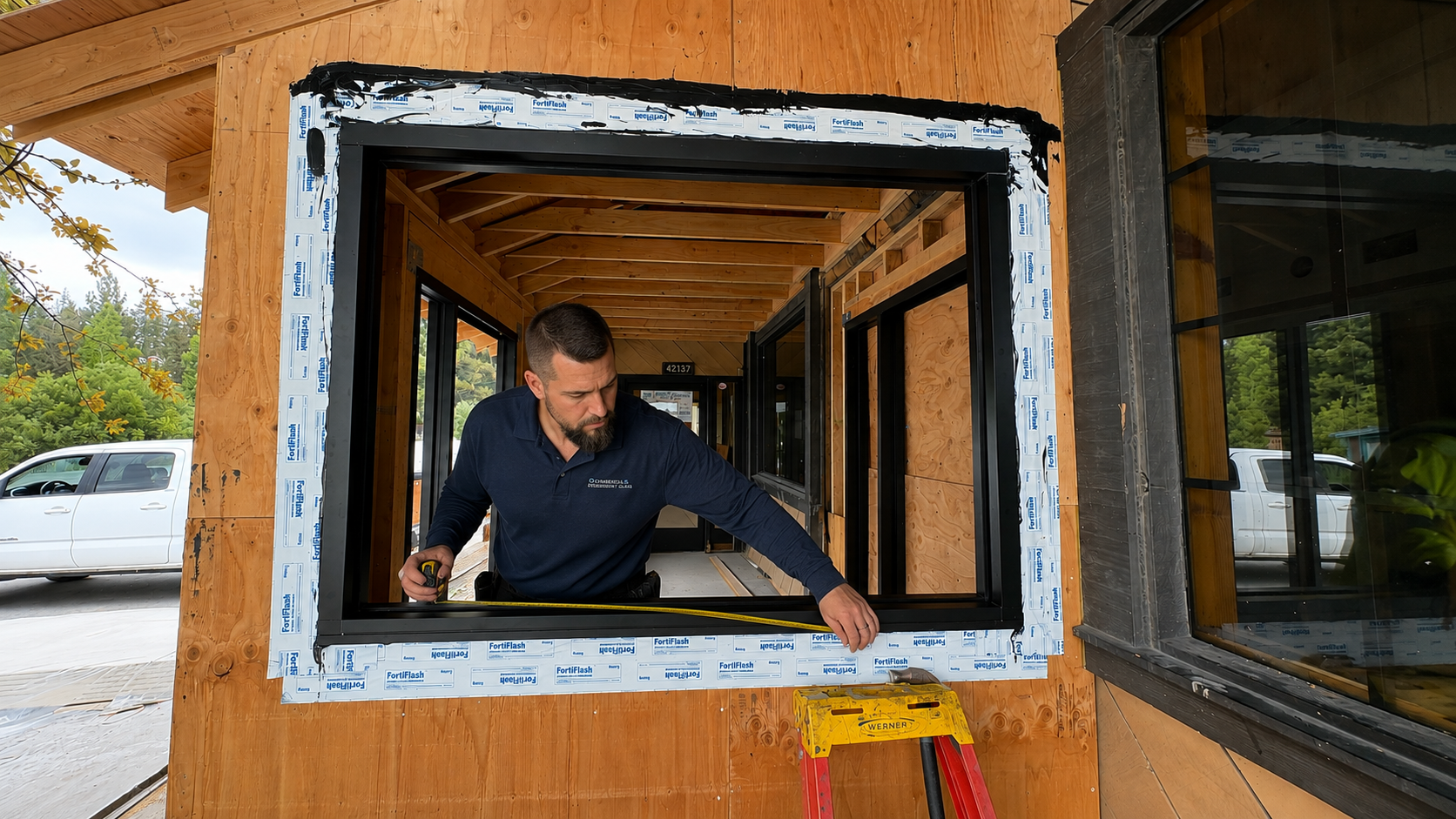
Insulated Glass in Nevada
Insulated glass can be particularly relevant in a climate dominated by cooling.
When an insulated glass unit loses its seal, moisture or haze may become visible between the panes. The appearance changes, and the unit no longer functions as originally intended.
Failed units generally require replacement rather than exterior cleaning.
For commercial properties with many matching units, repeated failures can also become a broader maintenance consideration.
The age of the glazing, exposure of different elevations, and future renovation plans can help determine whether individual replacement or a larger glazing upgrade makes sense.
Commercial Glass and HVAC
Few building systems are more important to Nevada commercial properties than air conditioning.
The storefront forms part of the exterior envelope that separates intense outdoor conditions from the conditioned interior.
Large areas of glass, entrance traffic, orientation, shading, occupancy, lighting, and interior equipment can all influence cooling conditions.
This relationship becomes particularly important during a tenant improvement.
If the storefront configuration and interior floor plan change, the HVAC system may also require modification. Supply registers, returns, thermostats, controls, zoning, ductwork, or rooftop equipment may need to support a completely different space.
Glass and HVAC ultimately serve the same interior environment.
Rooftop HVAC and Nevada Commercial Buildings
Many Nevada commercial buildings use rooftop mechanical equipment.
That creates a connection between tenant improvements, HVAC, electrical work, roofing, and waterproofing.
Replacing or modifying rooftop equipment can affect curbs, penetrations, duct connections, electrical feeds, flashing, and surrounding roof materials.
The construction below may simultaneously include new storefront glass, ceilings, walls, flooring, and finishes.
Coordinating rooftop work with the tenant improvement helps protect that investment.
An unresolved roof or mechanical penetration problem can eventually damage improvements far below the original source.
Commercial Glass and Roofing
Roofing and storefront glazing are both parts of the larger building envelope.
Water appearing around a storefront does not prove that the glass is leaking.
Moisture can enter through parapets, roof edges, flashing, penetrations, wall joints, canopies, or other exterior conditions. It may then travel through the construction before appearing around windows or doors.
Nevada’s dry climate can make intermittent leaks especially deceptive because the affected area may dry between weather events.
Repeatedly resealing the storefront without identifying the actual source can leave the underlying failure untouched.
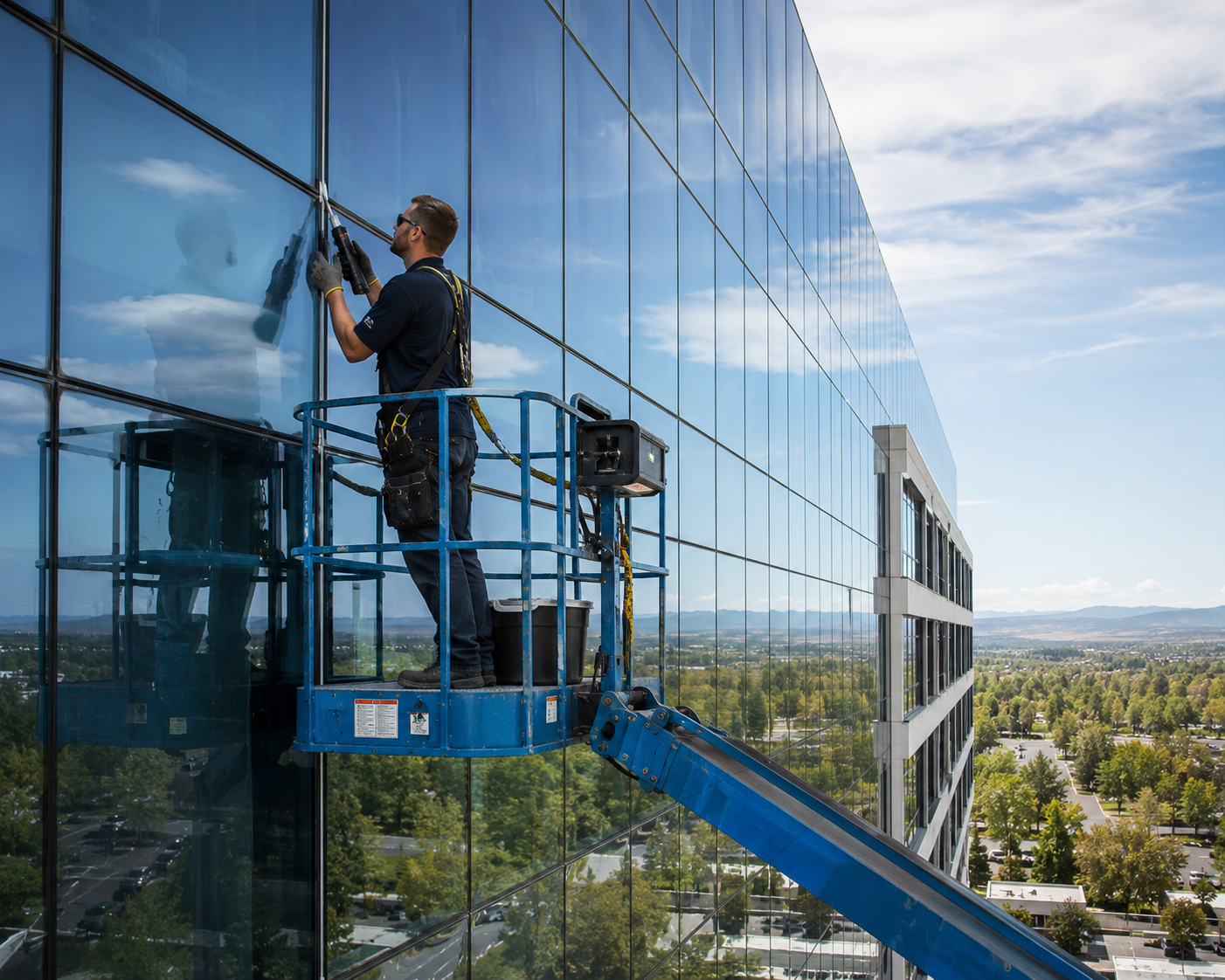
Monsoon Storms and Water Intrusion
Nevada may be dry, but commercial buildings still experience periods of intense rain and wind.
Storm conditions can expose weaknesses that remain unnoticed during long dry periods.
Wind-driven rain can test storefront perimeter joints, exterior wall transitions, roof edges, doors, and drainage systems.
Water entering at one location may appear somewhere else inside the property.
After a storm, commercial glass repair should distinguish between glazing failure and water migrating from another part of the building envelope.
That distinction can prevent unnecessary repairs while directing attention toward the real problem.
Restoration After Water Damage
When moisture reaches the interior, the project can extend beyond glazing.
Drywall, insulation, flooring, ceilings, paint, framing, and other materials may be affected.
Restoration should address both the damage and the source.
If the storefront requires repair, glazing work can be coordinated with drying, waterproofing, drywall replacement, painting, flooring, and other restoration scopes.
Completing cosmetic repairs before the source is corrected can result in the same damage returning during the next storm.
Electrical Systems Around Nevada Storefronts
Electrical work plays a particularly visible role in Nevada commercial properties.
Illuminated signs, architectural lighting, digital displays, automatic doors, access controls, cameras, card readers, sensors, and exterior lighting can all interact with storefront systems.
Las Vegas retail, restaurant, entertainment, and hospitality environments may have especially extensive façade lighting and signage.
A storefront renovation provides an opportunity to coordinate this infrastructure.
Conduit, junction boxes, power supplies, controls, and wiring can be positioned before surrounding walls and finishes are closed.
That produces a cleaner result than adding electrical components after the glazing work is complete.
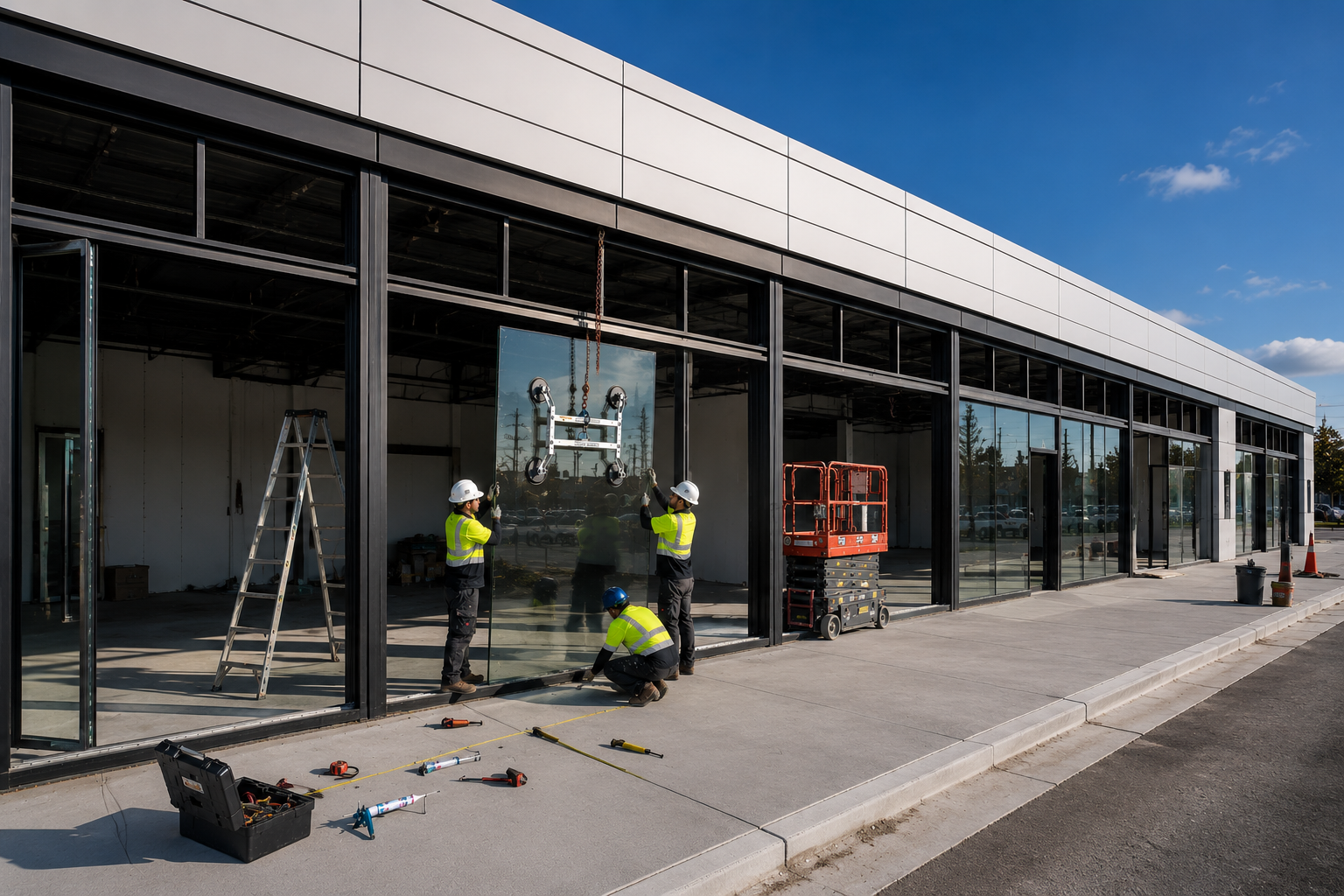
Tenant Improvement Storefront Glass
Tenant improvements often provide the best opportunity to modernize an older Nevada storefront.
A new tenant may want larger glass openings, different entrances, updated aluminum framing, improved doors, new signage, or a more contemporary façade.
Those decisions influence the interior.
Flooring has to meet entrance thresholds correctly. Drywall may terminate against new framing. Electrical infrastructure must support signs and access systems. HVAC has to respond to the finished exterior envelope and floor plan.
Plumbing can also reshape the space when the building changes use.
Treating storefront glass as part of the complete TI allows these systems to be coordinated instead of repaired independently.
Plumbing and Nevada Tenant Improvements
Plumbing becomes especially important when a commercial suite changes from one use to another.
A former retail space becoming a restaurant may require substantial water, drainage, restroom, and kitchen work.
Medical facilities, salons, fitness businesses, and other specialized tenants can introduce different plumbing requirements.
Those systems influence where walls, service areas, counters, restrooms, and equipment can be located.
Eventually, the floor plan reaches the storefront.
Entrance location and customer circulation should support the finished operation rather than simply preserve the layout used by the previous tenant.
Painting and Exterior Finishes
Nevada sunlight can be demanding on exterior finishes.
A storefront replacement may place new aluminum and glass next to older paint, stucco, metal panels, trim, or previously patched areas.
Those differences can become much more noticeable after the glazing is upgraded.
Painting and exterior restoration help connect the new storefront with the existing building.
Interior finishes may need similar attention.
Drywall, ceilings, soffits, columns, flooring, and painted walls around the opening can all be disturbed during storefront construction.
Finishing those transitions properly makes the renovation look complete.
Retail and Shopping Center Glass Repair
Nevada shopping centers depend heavily on storefront visibility.
Glass displays merchandise and connects businesses with pedestrian areas, while entrance doors handle continuous customer traffic.
Damage can therefore affect both appearance and operation.
Retail repairs may involve individual glass panels, doors, framing, hardware, signs, or complete storefront sections.
When a tenant is also remodeling the interior, the glazing can be coordinated with lighting, electrical work, painting, flooring, displays, and other TI construction.
This is often more efficient than treating the storefront as a separate project.
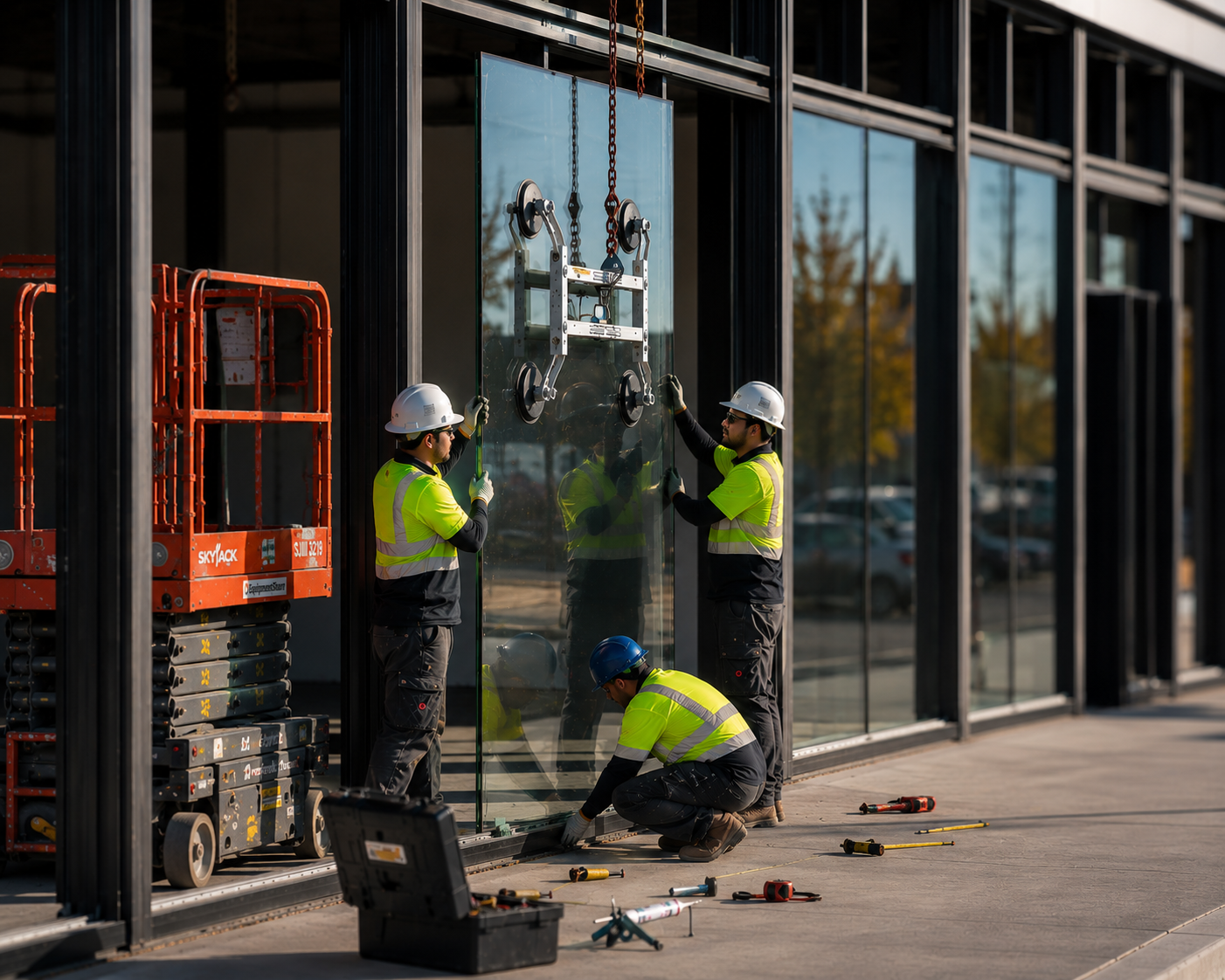
Restaurant Storefront Glass
Restaurants create particularly complex tenant improvements.
Storefront glass establishes visibility and customer access, while the interior may require substantial HVAC, electrical, plumbing, fire protection, and finish work.
Kitchen ventilation can extend construction all the way to the roof.
Signs and exterior lighting add another electrical component at the façade.
The entrance then has to handle frequent traffic while maintaining reliable door operation.
Coordinating these scopes early can help the restaurant storefront support the complete build-out.
Office and Medical Glass Repair
Nevada office and medical properties can require both exterior and interior glazing.
Exterior work may involve entrances, storefront glass, aluminum framing, and doors. Interior renovations can introduce glass conference rooms, sidelites, partitions, reception glazing, or other architectural glass.
Medical tenant improvements may also require significant changes to HVAC, plumbing, electrical systems, and interior circulation.
Glazing should follow the finished operational plan.
That makes storefront and interior glass part of the broader commercial construction strategy rather than decorative elements added at the end.
Emergency Commercial Glass Replacement
Vehicle impact, vandalism, severe breakage, entrance damage, and other unexpected events can require immediate attention.
The first priority is protecting people and securing the property.
Permanent replacement can then be planned around the existing glass, framing, entrance system, and surrounding conditions.
Severe impacts may damage more than one component.
Aluminum framing, door hardware, adjacent finishes, electrical devices, and interior materials can all be affected.
The permanent repair should address the complete damaged area instead of only replacing the most visible piece of glass.
Reno, Sparks and Northern Nevada Glass
Nevada commercial glass conditions are not identical statewide.
Las Vegas and Southern Nevada are strongly associated with extreme desert heat and intense solar exposure, while Reno, Sparks, Carson City, and northern markets add colder winter conditions to the equation.
Northern Nevada storefronts can experience freezing temperatures, snow, wind, and larger seasonal transitions.
Commercial entrance systems therefore need to operate across a wider range of weather conditions.
Glass, framing, perimeter seals, thresholds, doors, and surrounding building-envelope components should be evaluated according to the environment where the property is actually located.
Repair or Replace the Storefront?
The right decision depends on more than the age of the glass.
A single damaged panel within a functional storefront can favor repair. Multiple failed glass units, damaged framing, recurring door problems, deteriorated seals, water intrusion, or an outdated configuration may justify broader replacement.
Tenant plans also matter.
Repairing an old storefront immediately before a major commercial build-out may not provide much value if the façade will soon be redesigned.
Evaluating the current condition and future use together creates a clearer repair-versus-replacement decision.
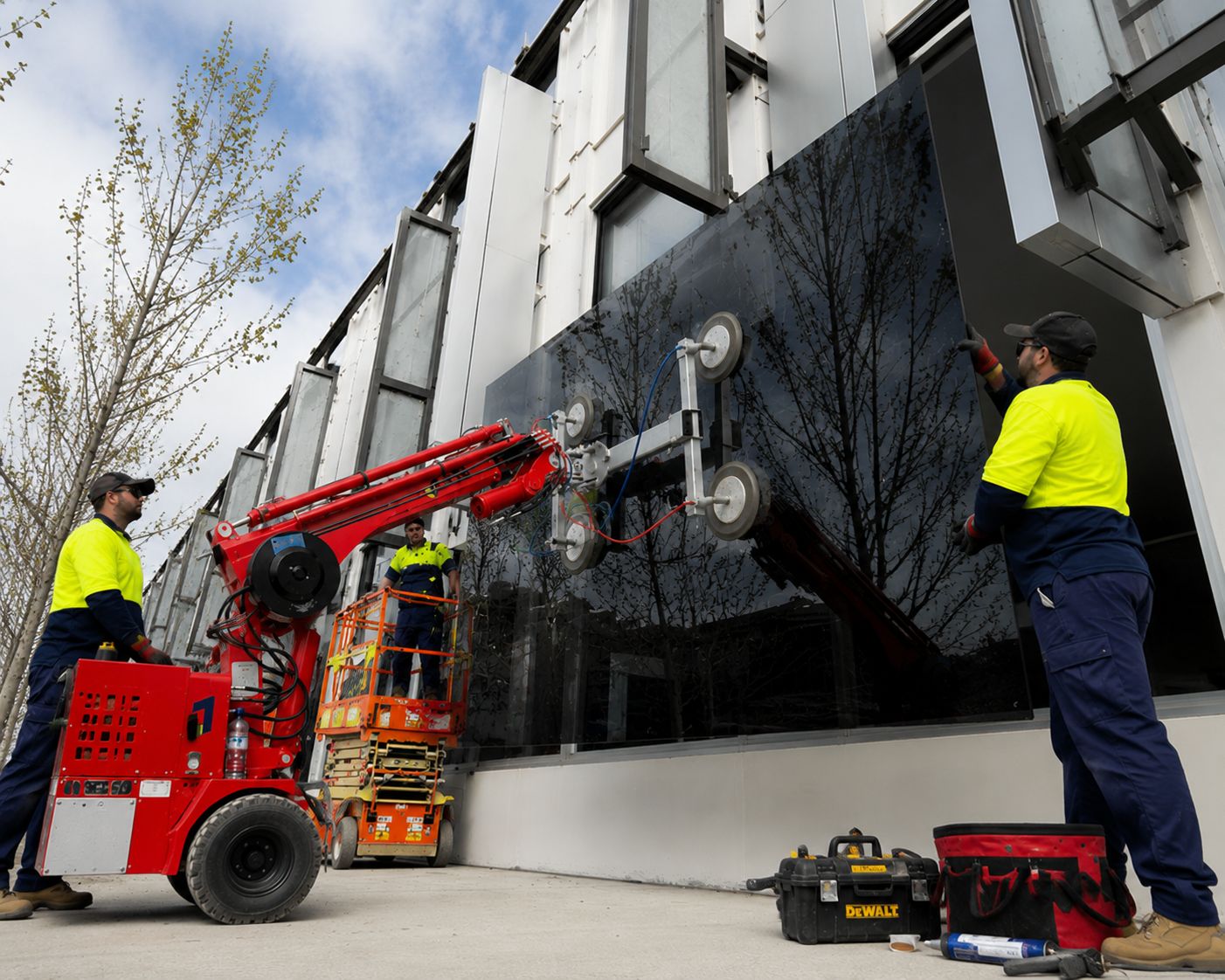
Commercial Glass Repair Across Nevada
BHG Storefront supports commercial glass and storefront projects throughout Nevada, including Las Vegas, Henderson, North Las Vegas, Summerlin, Reno, Sparks, Carson City, and surrounding commercial markets.
The buildings vary substantially.
A Las Vegas retail storefront can face intense sun and continuous pedestrian traffic. A Henderson medical build-out may emphasize energy performance and entrance accessibility. A Reno commercial property can experience much colder winter conditions.
The glazing solution should reflect those differences rather than treating Nevada as one uniform environment.
A Nevada Approach to Commercial Glass Repair
Commercial glass in Nevada operates at the intersection of architecture, climate, and building systems.
Glass and aluminum face intense solar exposure. HVAC works to maintain comfortable interior conditions. Rooftop mechanical systems interact with roofing and waterproofing. Electrical infrastructure powers signs, lighting, entrances, and security. Plumbing supports changing tenant uses.
Storms can reveal hidden envelope failures. Desert dust can affect heavily used entrances. Restoration may become necessary when water or impact damage extends beyond the storefront.
For Nevada commercial properties, looking at those relationships can produce a more complete repair strategy.
Whether the project involves one broken panel, a failing entrance, storefront replacement, or a complete tenant improvement, the best result comes from understanding the entire commercial building—not just the glass.