
Dallas high-rise glass installation is a team sport played many stories above the street. Setting large glass units on a tower takes the right access, the right equipment, and close coordination with every other trade on site. As the Dallas skyline keeps growing, more owners and builders face these challenges on office towers, hotels, and residential high-rises. This guide explains how glaziers reach upper floors, which equipment they use, and how they work with the rest of the project team.
Owners, general contractors, and project managers will find practical steps here.
Why High-Rise Glass Is Different
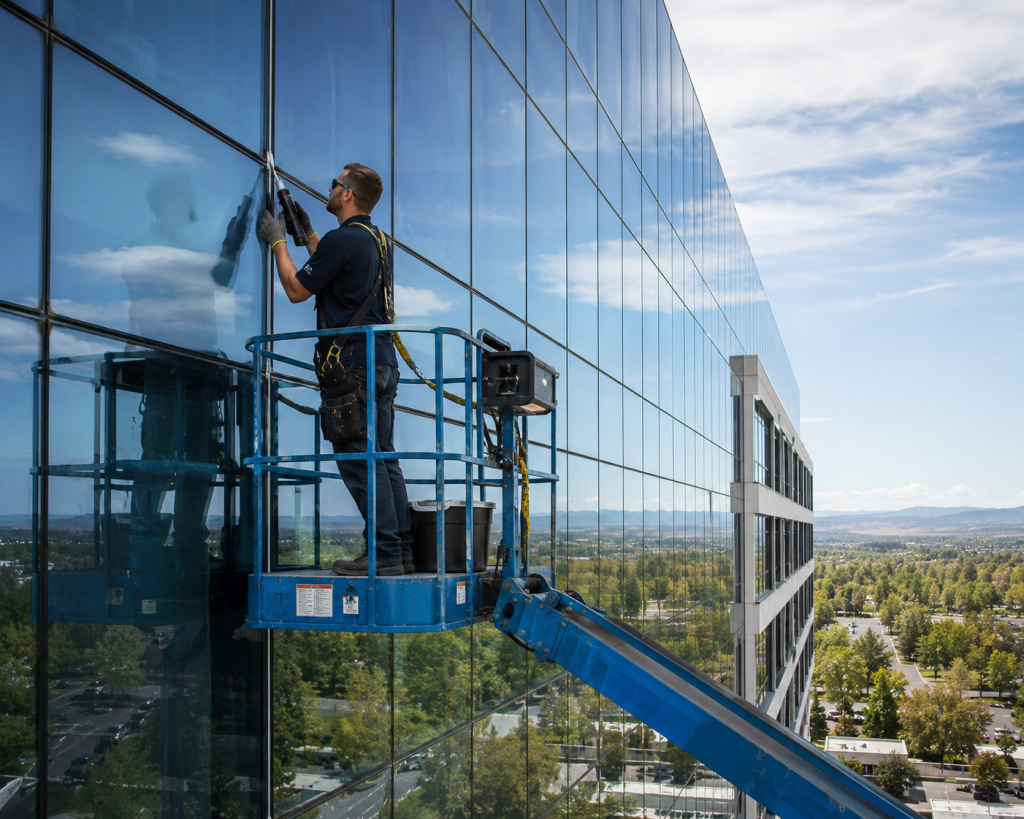
On a low building, crews can set glass from the ground or a ladder. On a tower, crews have to hoist every pane high into the air and set it exactly. Wind is stronger up high, and dropping anything is extremely dangerous. As a result, high-rise glazing needs careful planning, special equipment, and strict safety rules.
Access Methods for Dallas High-Rise Glass Installation
Glaziers use several ways to reach upper floors:
- Tower cranes lift large units or crates to each level
- Mini cranes and floor cranes set glass from inside the building
- Boom lifts reach lower floors from the ground
- Swing stages hang from the roof for exterior work
- Mast climbers rise along the face of the building
The right choice depends on the system, the building height, and site space.
Installing From Inside the Building
Many modern systems, such as unitized curtain wall and window wall, install from inside. Crews use small cranes or hoists on each floor to lift units into place. This approach reduces the need for exterior access and keeps work moving in bad weather. However, it requires open floor space near the slab edge and good coordination with interior trades.
Dallas High-Rise Glass Installation Equipment
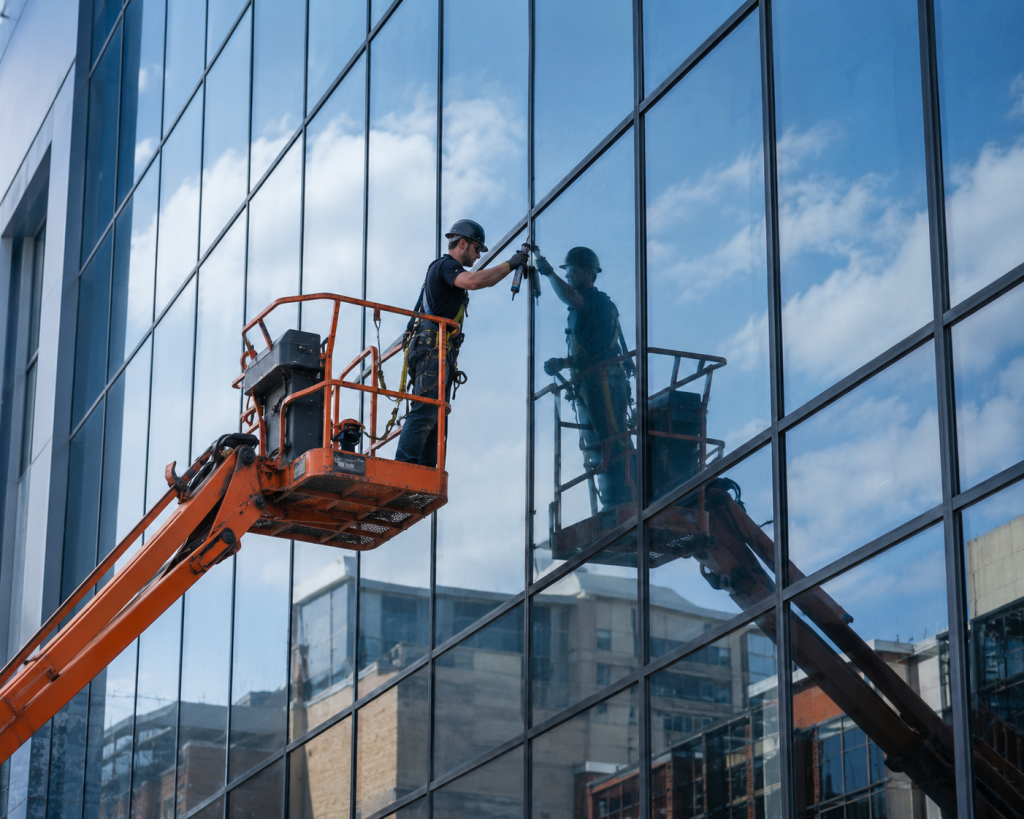
Beyond cranes and lifts, glaziers rely on vacuum lifters that grip glass with suction cups. These tools let crews handle heavy panes safely. Hoists, rigging, and tag lines help control units as they move. In addition, crews use specialized tools to set anchors, shim units, and seal joints. Crews inspect every piece of gear and confirm its rating before each lift.
Wind Limits for Dallas High-Rise Glass Installation
Wind is the biggest risk when lifting glass. A large pane acts like a sail and can swing out of control. Therefore, crews set wind limits and stop lifting when gusts exceed them. Dallas spring storms bring strong winds, lightning, and sometimes hail. So crews watch forecasts closely. The National Weather Service in Fort Worth provides local forecasts.
Dallas High-Rise Glass Installation Safety Plans
High-rise glazing needs a written safety plan. It covers fall protection, rigging, emergency steps, and exclusion zones on the ground. Exclusion zones keep people away from areas below lifting operations. In addition, crews hold daily safety talks before work starts. Strong safety habits protect workers and the public.
Dallas High-Rise Glass Installation and Contractor Coordination
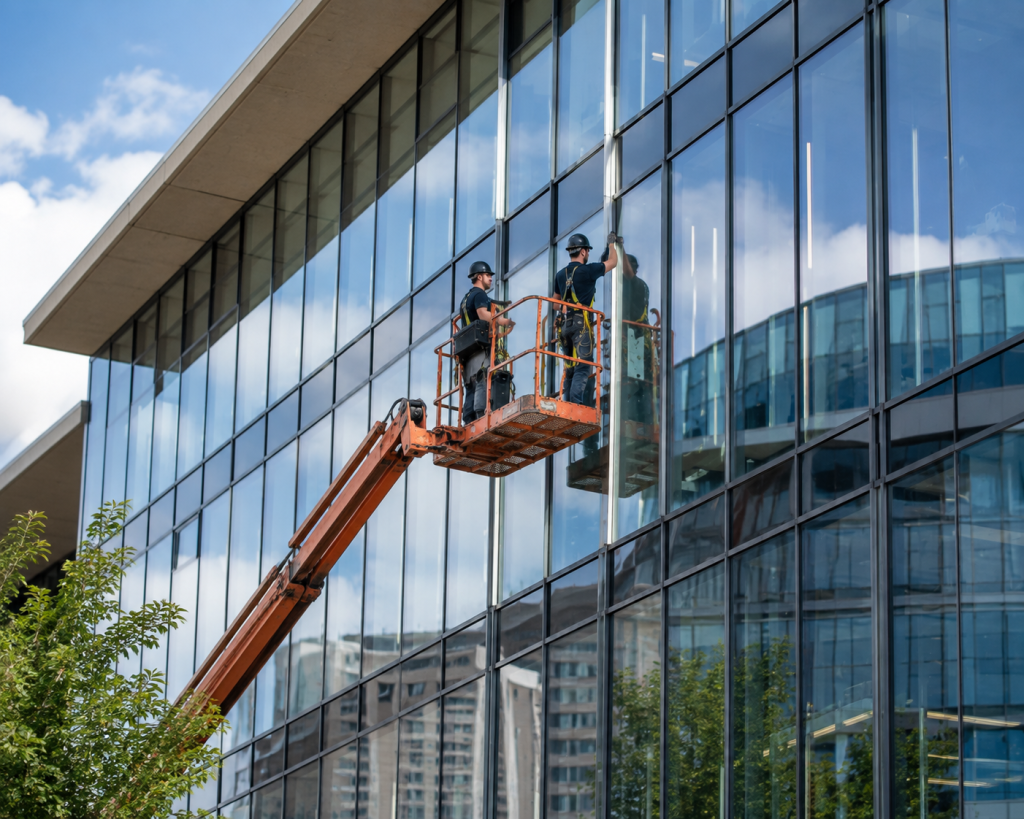
The glazier is one of many trades on a tower. Steel, concrete, fireproofing, mechanical, and interior trades all compete for space and crane time. So the general contractor must coordinate carefully. For example, the glazier may need certain floors cleared near the slab edge on specific days. Meanwhile, the glazier shares crane time with steel crews and equipment deliveries. Regular coordination meetings keep everyone on schedule.
Sequencing the Building Envelope
Closing in the building, or drying it in, is a major milestone. Once the glass is in, interior trades can work without weather delays. Therefore, the glass schedule often drives the whole project. Glaziers usually work from the bottom up, floor by floor. Some projects start on the lower floors while concrete or steel is still rising above.
Street Closures and City Permits
Downtown and uptown Dallas sites often need lane or sidewalk closures for cranes and deliveries. These closures require city permits and careful timing. For example, large lifts may only be allowed on weekends or early mornings. So plan closures well in advance and share them with neighbors. Clear signs and flaggers keep traffic and pedestrians safe.
Training and Crew Experience
High-rise work is not the place for new crews to learn on the job. Experienced foremen, trained riggers, and certified equipment operators make a big difference. In addition, crews should practice emergency plans, such as rescue from a swing stage. Ask your contractor how they train and certify their high-rise teams.
Deliveries and Material Staging
Typically, glass and frames arrive in large crates. Downtown Dallas sites often have little space for storage. So deliveries must be timed to match the install schedule. Crates may go straight to upper floors by crane, or to a staging area nearby. Careful planning avoids damaged glass and blocked streets.
Quality Checks Along the Way
In short, crews set each unit level and plumb, then seal it. Inspections happen as work progresses, not just at the end. Many projects also include water testing on finished sections. Catching issues early is far easier than fixing them after interior finishes go in.
Repairs and Replacements on Towers
Glass on high-rises sometimes breaks after the building opens, due to impact, thermal stress, or defects. Replacing a pane high up uses the same access tools as new installation, often swing stages or interior cranes. Our commercial glass replacement page explains this service.
After the Building Opens
Even after the tower is done, the glass needs care. Window cleaning rigs, roof anchors, and davits let crews reach every pane. In addition, owners should plan periodic inspections of sealant and anchors. Good access planning during construction makes upkeep safer and cheaper for decades. So ask the design team how the facade will be cleaned and repaired before the building opens.
Neighbors and Noise
Tower sites sit close to offices, homes, and shops. Crane work, deliveries, and backup alarms can bother neighbors. So keep them informed with notices and a contact number. Quick replies to concerns build goodwill and keep the job moving.
Choosing a High-Rise Glazing Contractor
Look for a contractor with proven high-rise experience, a strong safety record, and the right equipment or partners. Ask about past towers, crew training, and how they handle wind delays. Many leading firms also send crews through courses offered by the National Glass Association.
Dallas High-Rise Glass Installation Checklist
- Choose access methods for each part of the building
- Plan equipment, rigging, and vacuum lifters
- Set wind limits and weather plans
- Write a safety plan with exclusion zones
- Coordinate crane time and floor access
- Schedule deliveries to match installation
- Inspect and water test as work progresses
Dallas High-Rise Glass Installation FAQ
How many units can a crew set per day?
It varies with unit size and access, but unitized systems can move quickly once crews are in rhythm.
What happens on windy days?
Crews stop lifting when wind passes safe limits and work on tasks that do not involve moving glass.
Can glass be installed while concrete is still going up?
Yes, on many projects lower floors are glazed while upper floors are still being built.
Plan Your Tower With Confidence
Good access, equipment, and coordination make Dallas high-rise glass installation safe and efficient. For help with your project, see our Texas commercial glass page or contact our team.